Casino and accommodation listings can suggest a link, but the site relationship, room types and bookable rates need separate confirmation.
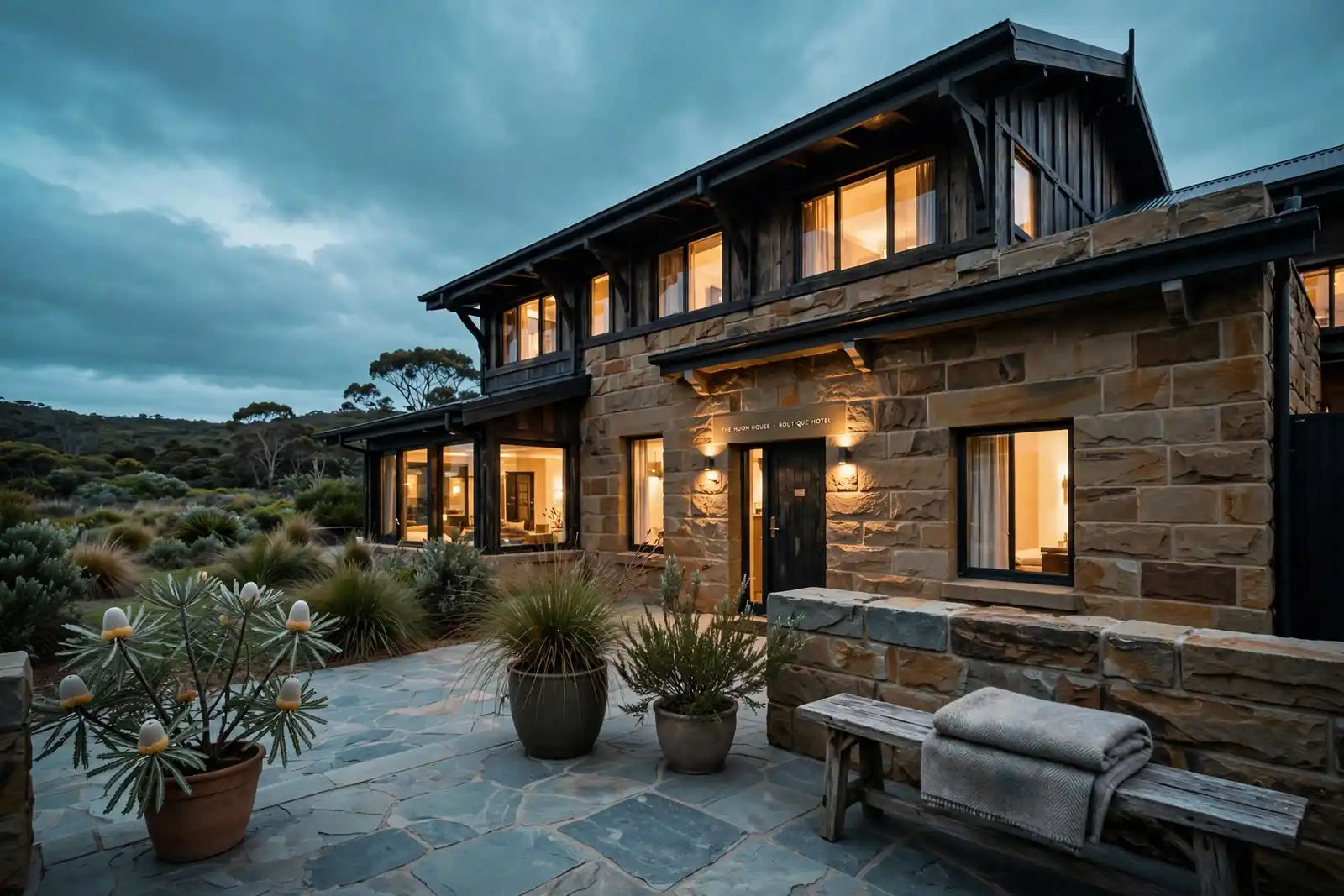
A casino hotel sounds like a single proposition: a room upstairs, a gaming floor downstairs, and no need to decide where one ends and the other begins. In practice, the label can describe different arrangements. A property may be part of a casino complex, associated with a nearby venue, or simply appear in accommodation results alongside one. The phrase alone settles none of that.
That distinction matters when comparing places to stay in Tasmania. A hotel’s name, a booking-page category and a map pin can each suggest a connection without explaining its nature. Before treating a room as part of a casino stay, the useful detail is the relationship between the accommodation and the venue: whether they share a site, are connected, or require separate transport. Those are practical differences, not fine print for its own sake.
The same care applies to rooms. A listing may show accommodation in a general sense without establishing which room types are available for particular dates, what they include, or whether the displayed rate can still be booked. Room photographs and descriptions may help set expectations, but a final reservation depends on the live terms and availability shown by the property or booking service. A polished image is not a reservation.
Choosing a casino while based in Tasmania means checking the details that matter to you before signing up. This list offers a concise reference to the available licensing, deposit, and payout information for each operator.
SpinsUp
SpinsUp lists a Curaçao Gaming Control Board licence, OGL/2023/174/0082, held by Dama N.V.
Thor Casino
Thor Casino lists a Curaçao licence with Antillephone N.V. for Versus Odds B.V. Its minimum deposit is EUR 20.
Kingmaker
Kingmaker lists a minimum deposit of A$30. Its stated payout speed is around 90 minutes for crypto and 1–5 days for fiat.
MrPacho
MrPacho lists a minimum deposit of A$30. Its stated payout speed is 30–120 minutes for crypto and 24–72 hours for fiat.
Wild Tokyo
Wild Tokyo lists a Curaçao licence and a minimum deposit of A$10. Its stated payout speed is 30–60 minutes for crypto and 1–5 days for fiat.
JeetCity Casino
JeetCity Casino lists a Curaçao eGaming licence held by Dama N.V.
Roby Casino
Roby Casino lists a Curaçao eGaming licence held by Roby Games Ltd.
Playfina Casino
Playfina Casino lists a Curaçao eGaming licence held by Hollycorn N.V. since 2017. Its minimum deposit is A$20–30, depending on the offer.
Golden Pokies
Golden Pokies lists a Curaçao licence.
DragonSlots Casino
DragonSlots Casino lists a Curaçao Gaming Authority licence held by Jumpman Gaming Ltd.
Deals deserve similar scrutiny. The word can cover a reduced room rate, a package, or a promotion with conditions; it does not establish that any particular offer exists or that it applies to a chosen stay. The important questions are ordinary ones: which dates qualify, what the price includes, whether cancellation is permitted, and whether additional charges appear before payment. If a package mentions access or an included benefit, its terms should say precisely what that means. “Special” is a mood, not a contract.
There is also a small social history in the appeal of the casino hotel. The form promises to gather leisure into one place: sleeping, eating, entertainment and gaming arranged as a seamless outing. That convenience can be real where the facilities and booking arrangements support it. But a familiar label often does some of the work before the facts arrive. The hotel is imagined as an extension of the casino, and the casino as the reason to book the hotel. Neither assumption should substitute for a clear description.
For Tasmania, the name of a place and the presence of a gaming venue are not enough to establish a hotel’s current relationship with that venue. Accommodation details can change, and booking services may present properties in ways that blur distance and affiliation. A direct property description, a current booking page and a map can help establish what is actually being offered. Where those sources differ, the reservation terms and the property’s own explanation matter more than a broad category label.
Opening times belong to a separate practical check. A hotel reservation does not, by itself, establish when a casino venue is open, and a venue’s hours do not establish room availability. Those details can change independently. For a planned stay, the accommodation confirmation and the venue’s current information should be treated as separate pieces of the arrangement, not as one implied promise.
So the useful meaning of a casino stay in Tasmania is not simply “a room near gambling.” It is a particular accommodation relationship, for particular dates, under stated terms. Until those elements are clear, “casino hotel” remains a description to investigate rather than a guarantee of location, access, price or availability. That is less glamorous than the brochure. It is also more useful.
Poker and pokies are easily confused in casual conversation, but they point to different activities. A poker room suggests table play, where participants compete through hands and decisions. Pokies, also called Electronic Gaming Machines (EGMs), are games played on machines. A venue’s machine-gambling rules therefore say nothing by themselves about whether it has a dedicated poker room or hosts live poker.
That distinction matters in Tasmania, where a search for poker at a casino may mean several things: a regular cash game, a scheduled tournament, a private event, or simply a general interest in playing cards. Those are not interchangeable services. A tournament has its own format, entry conditions and start time; a cash game has different arrangements. A room may also be described as a poker room without that wording confirming that games are running on a particular day.
Attention: Regulations regarding poker machines and mandatory pre-commitment in NSW do not apply to poker tables or tournaments in Tasmania.
There, the legal age for gambling on poker machines is 18, and mandatory pre-commitment requires players to set a loss limit before play. Club Liverpool has the largest number of operational poker machines among clubs in that state. These points belong to the regulation and machine-gambling landscape of NSW; they cannot be carried across Bass Strait as evidence about poker tables or tournaments in Tasmania.
The distinction is more than technical. A machine is governed as a gambling device, while a poker tournament is organised around players, a format and an event schedule. One may exist without the other. The presence of a sports bar, hotel rooms or other general amenities would not settle the question either. They answer different practical needs.
A useful venue listing would make the relevant details plain: whether poker is offered, whether play is a cash game or tournament, how events are scheduled, and where official updates appear. For a tournament, the date and registration conditions matter as much as the word “poker”; an old event notice cannot establish that a new one is taking place. The same applies to broad descriptions such as “poker nights”, which may refer to different formats and may not indicate a casino tournament.
The phrases “casino rooms” and “casino sports bar” also carry more than one possible meaning. “Rooms” can refer to accommodation, while a poker room is a gaming facility; a sports bar is a separate amenity. None should be treated as evidence for another. A venue’s current opening status is another question again, and does not establish whether a poker event is scheduled.
This is where precise wording earns its keep. A listing that separates table poker from pokies, and tournaments from casual play, gives a clearer account than one that gathers every card-related or gaming term under a single label. It also avoids making a machine-gambling rule sound like a description of live poker.
In a state where people may be looking for a particular game, a scheduled competition or simply somewhere to play, the distinction is practical, not pedantic. Poker is a format; a tournament is an event. The terms need their own evidence.
Bingo and dining belong to the ordinary catalogue of things people may expect from a casino venue: activities and amenities attached to a place. Their presence in a Tasmanian casino, however, cannot be inferred from the words used to describe it. A bingo session is not established by a venue’s reputation, and dining options cannot be assumed from the word “casino”. Each is a separate facility or programme, requiring current confirmation before it is treated as available.
The distinction matters because “online casino” points somewhere else entirely. It is not a digital version of a Tasmanian venue’s bingo room or dining service. It raises the question of what Australian law allows gambling operators to provide to people located in the country.
Legal Restriction
Under the Interactive Gambling Act 2001, operators based in Australia are prohibited from offering real-money online casino games to people within the country.
Under the Interactive Gambling Act 2001, operators based in Australia cannot offer real-money online casino games to people in Australia. The restriction covers pokies as well as table games such as blackjack and roulette. A land-based casino and an online gambling service therefore sit on different legal ground; the existence of one does not imply the availability or lawfulness of the other.
The position of offshore platforms is more complicated. It is technically not illegal for an Australian player to use one, but those services are not regulated under Australian law. That distinction is easy to flatten in casual conversation: a service may be reachable, yet still lack the protections and oversight associated with a domestic regulatory framework. The law draws its sharper line around what operators may provide, not around an assurance that an offshore site is safe or dependable.
There is also a difference between an offshore operator’s licence and Australian approval. A licence issued elsewhere does not turn an online casino into an Australian-regulated provider. Nor does the fact that some players may access real-money pokies offshore settle questions about consumer protection, disputes or the reliability of the service. Those are not details that can be read from a Tasmanian venue’s name.
So a person looking for bingo or a meal at a casino in Tasmania is asking about on-site facilities. A person considering online play is confronting a separate legal and practical issue. Treating both as one menu of casino services obscures the most important difference: one concerns what a physical venue may offer, while the other concerns online gambling restrictions and services outside Australia’s regulatory system.
The distinction is not merely technical. Casino buildings gather people in a shared place; online gambling is supplied across borders, where the operator’s location, the player’s location and the law governing the service may not coincide. Australian law prohibits locally based operators from supplying online casino games to people here, while offshore services remain outside domestic regulation. That is a narrow basis for confidence. Nothing about a search for a Tasmanian casino establishes that the venue offers online gambling, bingo or dining. Each claim stands on its own.
A stay near a casino is a different proposition from a room inside one. The first search is about the surrounding accommodation market: where to sleep, how far the journey would be, and whether the total cost suits the trip. The second depends on the casino itself operating a hotel. Neither should be assumed from the other.
For anyone comparing accommodation near a Tasmanian casino, the starting point is a confirmed venue address. Without it, “nearby” is only a label: a property’s distance can look modest on a map yet involve a different route or transport choice in practice. Once the address is established, maps and booking listings can help compare locations. A listing should still be checked directly, especially if the trip depends on a particular arrival time or accessibility feature.
The same care applies to accommodation deals. A low headline rate may reflect dates, room type, cancellation conditions or other restrictions, and availability can change between viewing and booking. The full price and terms matter more than the word “deal”. A casino promotion is not automatically a lodging offer; the two may have separate conditions, or there may be no accommodation component at all. Treating every promotion as a room discount is a tidy way to misunderstand both.
A practical comparison can be made without assuming that any particular property is connected to a casino. Check the booking conditions, what is included in the quoted rate, and whether the location makes sense for the planned journey. Where transport or parking would affect the choice, those details need separate confirmation rather than being inferred from a hotel description or a map pin. A nearby address is not a transport plan.
There is also a difference between “casino accommodation” as a broad phrase and accommodation actually provided by a casino. The phrase may lead to independent hotels, motels or other short-stay options in the area, as well as to searches for rooms on casino premises. Those categories should not be collapsed into one. A booking platform’s proximity label does not establish ownership, partnership or a special casino rate.
For a Tasmania casino trip, therefore, the sensible sequence is modest: establish which venue is intended, confirm its address, then compare independent stays using current listing details. Confirm any claimed package with the provider that would honour it. If a rate is described as exclusive or tied to casino activity, the conditions should make clear who supplies the room and what the offer actually includes. Without that clarity, the wording is marketing, not a booking assurance.
This approach may feel less satisfying than a ready-made list of “best” places, but a list without confirmed addresses, live prices and terms would offer confidence without substance. Accommodation is a local decision, not a feature that can safely be inferred from a casino’s name. Distance, price and availability belong to the specific dates and property. Small distinctions; real consequences.
A name is not an address, and a map pin is not proof that a venue is open to the public. For anyone trying to locate a casino in Tasmania, the useful details are practical ones: the exact street address, a working contact channel, directions to the entrance and information about arriving by car. Each should be checked against the venue’s own current information before a journey is planned. Listings copied between directories can preserve old details long after the place they describe has changed.
Contact searches often produce a phone number stripped of context. A number may belong to a central switchboard, a booking service or another business entirely; a directory can also lag behind a change of operator. The distinction matters when the question concerns access, a particular service or an event. A venue’s official contact page, where available, is a stronger starting point than a result that merely repeats a number. If details conflict, confirmation from the venue is more useful than confident formatting.
A map is best treated as a guide to location, not a catalogue of facilities. It may show a nearby road or entrance without making clear which door visitors should use, whether access is restricted, or whether parking belongs to the venue. Directions should be checked for the actual destination rather than inferred from a label on a map. A neat pin can conceal a long walk.
Parking is one of those modest arrangements that becomes important only when it is absent. A listing that marks a car park does not establish whether it is public, available to casino visitors, accessible at the intended time or subject to conditions. Those points call for direct confirmation. The same care applies to bars: a bar shown in an old photograph or third-party listing does not establish its current presence, service or access rules. The word “bar” is easy to publish; the details are harder.
Concert listings need similar restraint. A past performance, a social post or an event page left online is not evidence of a current programme. Dates and access arrangements belong to the particular event, not to a general impression of what a casino might host. This is where a venue page and an event organiser’s notice can be more informative than a map or directory.
Questions about baccarat or craps also need to be kept separate from directions and contact details. A game name in a listing does not establish that the game is offered at a Tasmanian venue, or that it is available at a particular time. Availability should be confirmed through an appropriate venue channel, rather than inferred from the word “casino”.
There is a broader distinction worth keeping clear. A physical venue’s address and visitor information do not make online casino gambling lawful in Australia. The Interactive Gambling Act 2001 prohibits operators from providing real-money online casino games to people in Australia. A local map, however accurate, answers a question about where a place is; it does not settle what services may lawfully be offered online.
For a reliable visit, the essential details are the ones that can be confirmed close to the intended date: the address, contact route, access arrangements and any specific facility or event. Everything else is atmosphere. And atmosphere gives poor directions.
Breakfast, a buffet and a resort stay belong to the practical business of food and accommodation. A rewards programme belongs to a different ledger: it may involve points, member benefits or promotional terms, none of which can be inferred from a meal listing. The words “casino resort” do not, by themselves, establish that breakfast is served, that a buffet operates or that a particular rewards scheme exists. Those details need confirmation from the venue before plans are made.
Employment searches are separate again. A reference to casino jobs is not evidence of a current vacancy; any opening, role or application process needs confirmation through an official employer channel. A search result can mix these subjects together, but they do not become one service simply by sharing a page.
Online bonus terms require a different kind of care. They concern online gambling offers, not a Tasmanian venue’s loyalty programme. Australian law prohibits operators from providing real-money online casino games, including pokies, to people physically in Australia. Bonus descriptions should therefore not be mistaken for an invitation or a locally available casino offer.
Where online offers are encountered, the headline gift is only one part of the arrangement. Wagering requirements can determine how much play is required before winnings may be withdrawn; other terms may impose a maximum cashout or allow winnings to be voided. Those conditions can change the practical value of an offer substantially. Offshore platforms are not regulated under Australian law, and a player may have limited options for resolving a dispute; winnings may also be at risk if an operator becomes insolvent.
Wagering requirements for free-spin winnings can vary significantly, with some reports citing requirements from 20x to 50x, while others specify a 30x wager before withdrawal.
The figures attached to free-spin offers are not uniform. A report published by psu.com describes wagering requirements of 20x to 50x for free-spin winnings. Separately, a specialist review states that winnings from free spins must be wagered 30 times before withdrawal. These are source-specific descriptions, not a universal rule for every offer. The terms attached to an individual promotion are what govern that promotion.
Pokies may count fully toward a wagering requirement, meaning that every dollar wagered on them can contribute the full amount to the requirement. That does not make a bonus cash, nor does it remove the conditions on withdrawal. Each promotion needs to be read on its own terms, including which games qualify and how winnings are treated.
Using a VPN to reach a region-blocked pokies site may breach the operator’s terms and can lead to account suspension. It does not make an online casino offer lawful in Australia. The distinction is plain enough. Small print, large consequences.
Whether a casino in Tasmania is open is a practical question with a deceptively unstable answer. Opening hours can change, and a past listing or an old review cannot establish the present position. A reopening claim needs the same care: an announced intention, a proposed date and a venue actually receiving visitors are different things. Until a current notice from the venue or a relevant public authority confirms the status, neither “open” nor “reopening” should be treated as settled.
That distinction matters because search results preserve time badly. A page may remain visible long after the circumstances it describes have changed; a headline can make a proposal sound like a completed event. The sensible test is not how confidently a page is worded, but whether its date and source can be checked. For operating status, current venue communications are more useful than an undated directory entry. For a development proposal, planning or government notices can clarify whether an idea has progressed beyond announcement.
Entertainment and events call for the same separation between a calendar and a promise. A listing may refer to a past performance, a one-off function or an event that has since changed. Before treating any programme as current, its date, venue and organiser need to align. “Coming soon” is not a schedule. Nor does a general description of entertainment establish what is happening on a particular night.
Development news has its own vocabulary of uncertainty. A concept, an application and an approved project are not interchangeable stages, even when each is described as a major change. Employment claims also need a direct route to confirmation: a job title copied into an old listing does not prove that a vacancy remains open. Current recruitment information, where available, is the relevant evidence; speculation about future development is not a job notice.
A menu mention can be another clue that a page is dated, but it is not evidence of opening hours or event schedules. Those details belong to separate checks. A broad casino review has similar limits: it may describe a visitor’s experience at one point in time, not the venue’s present operating status. The details age. Quickly.
For anyone weighing a visit, the useful record is therefore modest: a current opening notice, a dated events calendar and, where relevant, a clearly stated development or recruitment update. If those cannot be found or do not agree, the uncertainty should remain visible rather than being filled with an assumed schedule. That is less dramatic than a reopening headline, but more reliable.
A restaurant attached to a casino is easy to imagine: a room of polished tables, a menu arranged to keep the evening moving, perhaps a dining option presented as part of a larger night out. But an image is not an inventory. The phrase “Tasmanian casino restaurant” does not, by itself, establish that a particular venue has a restaurant, or tell anyone what it serves.
That distinction matters because dining can be described in several different ways. A restaurant inside a casino, a food outlet elsewhere in the same complex and an independent restaurant nearby are not interchangeable. A listing that groups them together may make the surroundings sound like a single amenity, when the practical details could belong to separate businesses with separate arrangements.
The useful questions are concrete. Is the restaurant part of the casino venue, or merely close to it? Is there a current menu, and does it describe the food actually served? Are reservations available, and are there conditions attached to them? If opening times are published, do they apply to the restaurant itself rather than the wider venue? These details can change independently; a general description of a casino cannot settle them.
Menus also carry more information than a cuisine label. They show whether a place is designed for a full meal or a brief stop, whether dietary needs are addressed, and whether prices are visible before a booking is made. Without a current menu, phrases such as “fine dining” or “casual dining” are mostly atmosphere. Atmosphere has never been especially good at answering what dinner costs.
A careful check begins with material issued by the venue or restaurant itself, then compares it with recent listings and booking information. Dates matter. An old menu can remain in circulation after a restaurant has changed its offer, and a directory entry can outlive the business it describes. If details conflict, the most specific current confirmation is more useful than a broad promotional description.
For a Tasmanian casino, claims about restaurants should therefore be treated as venue-specific, not inferred from the word “casino.” The name, location, menu, booking process and operating arrangements all need to match the same establishment. A nearby restaurant may be a perfectly practical choice, but proximity does not make it an on-site facility.
This is a modest standard, though not a fussy one. Dining is often part of how a venue presents an evening, and it can shape whether a visit feels straightforward or requires extra planning. A restaurant listing earns confidence through particulars: identifiable premises, a current menu and clear arrangements. Without those, the promise remains only a promise.
A search for a casino spa in Tasmania can mean several different things: a treatment room inside a gaming venue, a separate day spa nearby, or simply a hotel amenity associated with a casino stay. Those are not interchangeable. A spa’s presence, services, booking arrangements and access rules need to be confirmed with the business itself; the word “casino” in a listing does not establish that treatments are offered on site.
The same care applies to a venue address. Tasmania is a state, not a single destination, and a broad label can obscure which property a listing refers to. Before travelling, the useful details are the venue’s full name, street address and any directions issued by the operator. A map result or an old directory entry may not settle whether a business still operates at that location.
Bars prompt a similar distinction. A bar may be part of a casino, part of a hotel, or an independent business nearby. Its existence, opening times, entry arrangements and service should not be inferred from a general venue description. In the built environment, one shared address can gather several businesses under one roof; it does not make their policies identical.
Careers information also belongs to the operator, not to the idea of a casino in the abstract. Vacancies, application channels and employment conditions change, so a current careers page or direct contact is more reliable than a reposted advertisement. A listing that names a venue is not, by itself, evidence that a role remains open.
Dress codes are another policy to confirm before arrival. Requirements can differ between gaming areas, bars and special events, and a general impression of what is “smart casual” is not a substitute for the venue’s own rules. If the policy is not clearly stated, direct confirmation avoids turning custom into an assumed rule.
The phrase “casino games” can also refer to different things. It may mean games available at a physical venue, or real-money casino games offered online. Under the Interactive Gambling Act 2001, operators cannot provide online casino games such as pokies, blackjack, roulette or poker to people physically located in Australia. That legal distinction matters: a venue-related search does not make online casino services lawful.
Tasmania’s scenery lends itself to the idea of a restorative day out, but an imagined spa is not a facility. Addresses, bars, jobs, dress rules and treatments each belong to a particular operator’s current information. The names sound straightforward. The details are not.
Food-court and pool searches concern facilities that can be easy to assume and surprisingly hard to pin down. A casino may be imagined as a self-contained leisure complex, with every amenity gathered under one roof. But a phrase such as “food court” describes a particular kind of food service; it is not another name for a restaurant, and the presence of one cannot be inferred from the presence of the other.
The same caution applies to a pool. The word might suggest a facility within the venue, but it does not establish that one exists, whether it is available to general visitors, or what conditions govern access. A pool associated with a separate business would be a different matter again. The distinction is practical, not pedantic: an assumed amenity can shape plans before anyone checks whether it is actually there.
For Tasmania, neither a casino food court nor a casino pool can be treated as confirmed on the strength of the wording alone. The sensible standard is a current, venue-specific listing or direct confirmation from the operator. Even then, the detail matters: a general reference to food does not confirm a food court, and a reference to leisure facilities does not by itself establish pool access.
This is a small example of how place-making works. The word “casino” carries a whole imagined landscape—meals, recreation, rooms, bright interiors—although each element has its own existence and rules. Search language bundles them together; the building, if it offers them, does not have to.
For anyone comparing Tasmanian venues, food-court and pool facilities belong in the category of details to verify, not features to presume. An attractive label is not a floor plan.
Pokies region blocking prevents games from being accessed in certain countries. Casinos or software providers can use a player’s IP address to identify their location and block games or access from excluded regions.
Modern pokies use a Random Number Generator, so each spin is independent, and their RTP describes the theoretical share of wagers returned over many spins. Some include progressive jackpots, free spins, or buy-in bonus rounds.
Yes. The Interactive Gambling Act restricts Australian-based operators from offering online casino games such as pokies, blackjack, and roulette to players in Australia; sports betting remains widely accessible and legal.
A casino or game provider can use a player’s IP address to estimate their location and block access from excluded countries. Blocked games may not appear in the lobby or may fail to load.
Offshore casinos are not regulated under Australian law, although it is technically not illegal for Australian players to use them. In NSW, the legal age for gambling on poker machines is 18, and mandatory pre-commitment requires players to set a loss limit before playing.