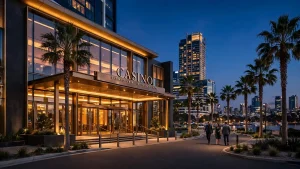
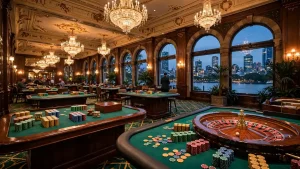
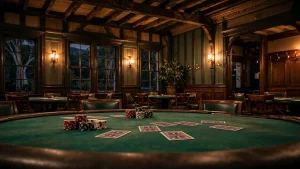
Available information does not confirm a Canberra casino hotel, venue facilities, opening hours, events, or accommodation offers.
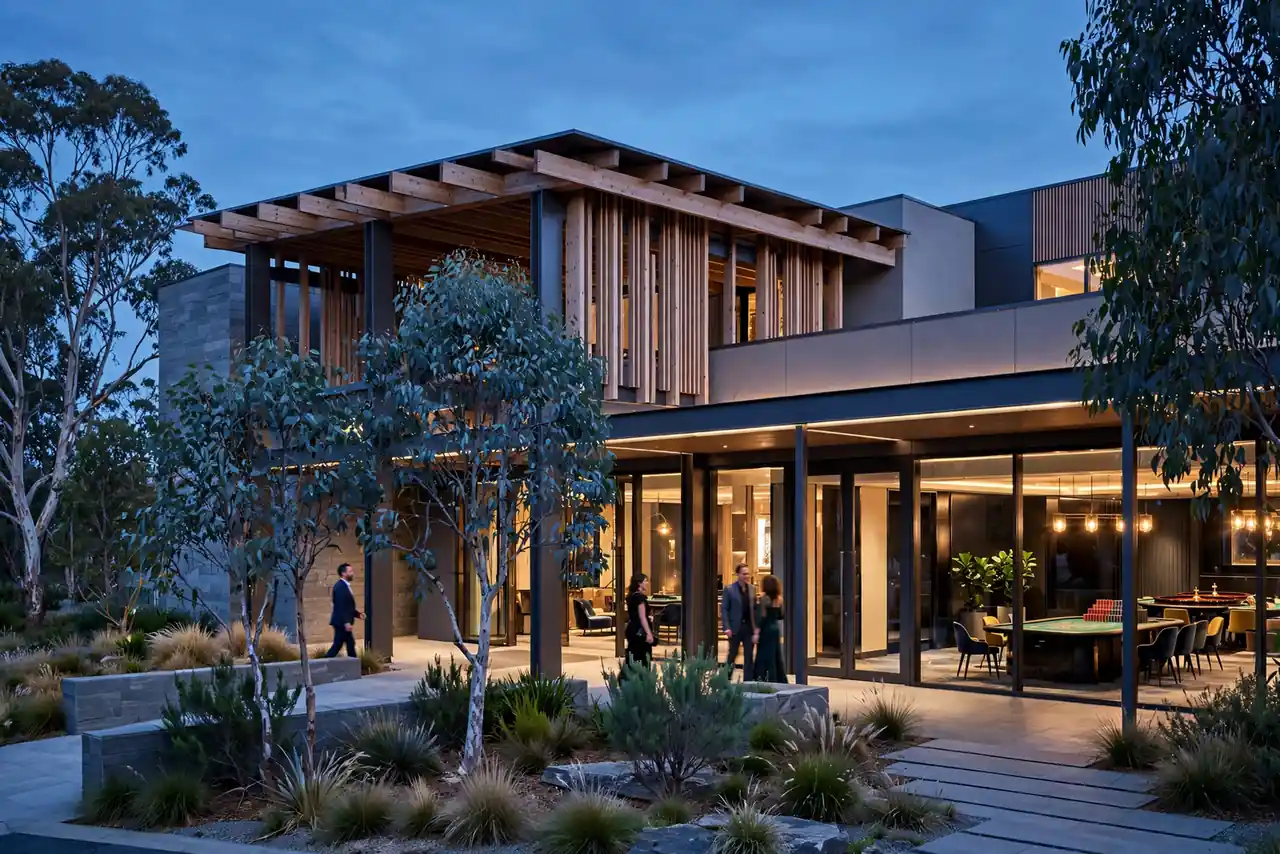
A casino hotel is more than a hotel with a casino somewhere in the same city. The phrase suggests a particular arrangement: accommodation operated by, attached to, or formally integrated with a casino, with rooms that can be booked as part of that venue’s offer. That distinction matters in Canberra, where the words “casino” and “hotel” can be placed together in a listing without, by themselves, explaining the relationship between the two.
The useful question is not simply whether a room appears in a map search. It is whether the lodging is genuinely an on-site part of a casino operation. A room package may be sold by a hotel, a travel intermediary or a casino’s own booking service; those are different commercial relationships. A photograph, a shared address or a phrase such as “casino hotel” cannot settle the point without details about who operates the accommodation and what the booking actually includes.
That is why room descriptions deserve more attention than promotional labels. A proper offer identifies the property, the room category and the terms attached to the reservation. If a package is said to include casino access or another benefit, that inclusion should be stated as a booking condition rather than left to implication. “Near the casino,” “casino view” and “casino hotel” are not interchangeable descriptions. The last one makes a claim about the venue itself.
Choosing a casino for Canberra in 2026 means checking the details that matter to you before signing up. This list offers a concise starting point, with available licensing, deposit and payout information noted for each operator.
SpinsUp
SpinsUp is listed with a Curacao Gaming Control Board licence, OGL/2023/174/0082, held by Dama N.V.
Thor Casino
Thor Casino is licensed in Curacao through Antillephone N.V. (Versus Odds B.V.). Its minimum deposit is EUR 20.
Kingmaker
Kingmaker lists a minimum deposit of A$30. Its stated payout times are around 90 minutes for crypto and 1–5 days for fiat.
MrPacho
MrPacho lists a minimum deposit of A$30. Its stated payout times are 30–120 minutes for crypto and 24–72 hours for fiat.
Wild Tokyo
Wild Tokyo is licensed in Curacao and lists a minimum deposit of A$10. Its stated payout times are 30–60 minutes for crypto and 1–5 days for fiat.
JeetCity Casino
JeetCity Casino is listed as licensed by Curacao eGaming, with Dama N.V. named as the operator.
Roby Casino
Roby Casino is listed as licensed by Curacao eGaming, with Roby Games Ltd named as the operator.
Playfina Casino
Playfina Casino is licensed by Curacao eGaming through Hollycorn N.V., with the licence held since 2017. Its minimum deposit is A$20–30, depending on the offer.
Golden Pokies
Golden Pokies is listed as licensed in Curacao.
DragonSlots Casino
DragonSlots Casino is listed as licensed by the Curacao Gaming Authority, with Jumpman Gaming Ltd named as the operator.
Deals require the same care. A lower displayed price may depend on dates, availability, cancellation conditions or a particular booking channel. A bundle can also combine services that are sold separately, so its headline should not be treated as a complete account of what is included. The meaningful comparison is between the final terms of two offers, not between their most inviting labels. Hospitality has always been skilled at making a room sound like an occasion.
An on-site hotel would also raise practical questions that a bare room rate cannot answer: whether reservations are handled by the accommodation or casino, how guests check in, and whether any advertised package applies to the dates selected. These are ordinary details, but they establish whether the casino and lodging function as one destination or merely share a line of promotional copy. A booking should identify the place where the room is supplied, not leave that to inference.
The wording around opening times can create another kind of confusion. Hotel services and casino operations need not follow the same schedule. A room reservation does not, on its own, establish that a casino is open at a particular time, just as a venue’s operating hours would not establish that rooms are available. Treating the two as one timetable turns a convenient phrase into a factual claim. They are separate arrangements.
For anyone assessing a purported Canberra casino hotel, the strongest signs are concrete and consistent: the property is named, the room inventory is presented by the accommodation provider, booking terms are visible, and any casino connection is described plainly. A package should say what it contains and who supplies each part. Where those details differ between listings, the more precise description carries more weight than the grander one.
There is a social idea tucked into the hotel label. It promises that entertainment, lodging and perhaps a night away can be gathered under one roof, turning gambling into a destination rather than a single activity. That can be an attractive proposition, but it is also a reason to read the wording closely. A destination is a relationship between services, not a phrase printed beside a bed.
The label alone is not the arrangement.
A poker room and a room of poker machines are different things, despite the way the words crowd together in venue listings. Live poker is played between people, with a venue providing a place for the game; poker machines, or Electronic Gaming Machines (EGMs), are individual gambling devices. A search for a Canberra poker room or tournament is therefore asking about a particular kind of activity, not simply whether a venue has gaming machines.
Live poker involves games played between people, whereas poker machines (Electronic Gaming Machines) are individual gambling devices.
That distinction is easy to lose in Australian club coverage, where machine counts often stand in for a broader idea of gambling. Club Liverpool, for instance, leads NSW clubs in the number of poker machines operating on its premises. It is a notable measure of scale, but it says nothing about live poker tables, tournament schedules or the character of a poker room. Machines can be counted. A card game is a different proposition.
Nor does the NSW comparison travel neatly across the border. The rules in that state set the minimum age for poker-machine gambling at 18 and require players to establish a loss limit through a pre-commitment system before play. Those are rules for NSW poker-machine gambling. They are not a description of what happens at a Canberra poker table, and they do not establish that a Canberra venue runs poker tournaments.
The distinction matters because tournament searches carry expectations of their own: a regular schedule, a format, entry conditions and a place to play. None follows automatically from the presence of a casino label, a bar or gaming machines. A poker room, if one is advertised, should be understood through its own current details rather than inferred from a neighbouring state’s club statistics. A name is not a schedule.
The same caution applies to the phrase “poker at a casino”. It may mean live card play, a tournament, or a player’s loose shorthand for machine gambling. These are not interchangeable activities. In particular, NSW’s pre-commitment requirements concern poker machines; they should not be presented as the rules for a live poker event in Canberra. A state’s regulatory vocabulary can travel farther than its jurisdiction, especially when venues are grouped under familiar labels.
For anyone comparing venues, the practical distinction is plain: a poker-machine count does not reveal whether there are live tables, and a tournament reference does not explain its dates or conditions. Those details belong to the individual venue and event.
That is the boundary. Canberra rooms and tournaments need their own confirmation; NSW machine rules remain NSW machine rules.
Baccarat and craps are familiar names in casino gaming, but their familiarity does not establish that either is offered at a Canberra venue. A game name can travel easily: it appears in films, gaming guides and the public vocabulary of casinos, then turns up in a local search. The leap from recognised game to confirmed table is still a leap.
The same distinction applies to bars. A request for a casino bar in Canberra expresses a clear practical interest—somewhere to meet, have a drink or pause between activities—but it does not identify a particular venue or confirm its facilities. Even a map pin or an old listing would need to be checked for its date and purpose before being treated as current information. Searchable is not the same as open, and a category label is not an inventory.
Car parking is similarly concrete, and therefore particularly easy to get wrong. A map may mark a nearby car park without showing whether it belongs to a venue, is available to its guests, or has conditions that matter to a visit. Without a confirmed address and current parking information, claims about access, entry points or charges would be guesswork. Maps are useful for finding places; they are less useful when the place itself has not been firmly identified.
Concerts invite a different kind of assumption. Casinos in other cities may stage entertainment, but that pattern cannot establish a Canberra programme. An event listing needs a venue, a date and a promoter or organiser whose information can be checked. Without those particulars, there is no sound basis for naming performers or describing a concert schedule. General expectations are not an event calendar.
Contact details deserve the same restraint. A phone number attached to a similarly named business could belong to another organisation, an outdated listing or a different location. A map result can also blur the distinction between a venue and nearby businesses. Until an official venue identity is clear, a number or pin should not be presented as a reliable way to reach a Canberra casino. The small print matters. So does the name above it.
This is not merely a technical problem. Casino language is portable, while venues are local. Baccarat, craps, bars, parking and concerts each suggest a plausible piece of a night out; none, by itself, supplies the address, operator or current status that would make the suggestion actionable. The city name in a phrase can make an uncertain claim sound settled. It does not settle it.
For anyone assembling plans, the sensible distinction is between a general description and a confirmed local detail. A game can be discussed as a casino game without claiming it is available in Canberra. A bar can be a search category without proving that a particular venue has one. Parking and entertainment require even more specific information, because both depend on location and time. Until those details can be tied to an identifiable venue, they remain possibilities, not features. A tidy map marker cannot do that work.
A search for an online casino in Canberra can return a familiar mix of games and offers, but familiarity is not a sign of local legality. The Interactive Gambling Act 2001 prohibits operators based in Australia from providing real-money online casino games to people in the country. Pokies, blackjack and roulette fall within that boundary. The law concerns the service being provided, not whether its website looks local or whether a game resembles one found elsewhere.
Sports betting sits on a different side of the line: it remains widely accessible and legal in Australia. That distinction can be easy to miss when casino-style games and betting products appear together online. They are not interchangeable categories. A lawful sports-wagering service does not make online casino games lawful, and the fact that a site offers both does not settle the status of each product.
For a provider to be a lawful gambling service in Australia, it must hold an ILGA licence. That does not mean an Australian online casino licence is available for real-money casino games: the federal restriction on supplying those games remains. The legal framework is less a doorway than a boundary with a sign on both sides.
Offshore sites occupy a more complicated position. Their operators are not regulated under Australian law, while Australian players are not criminally liable simply for using such a platform. That limited distinction should not be mistaken for local approval or protection. Offshore operators are not lawful Australian providers, and a player using one is not dealing within Australia’s regulatory system. If a dispute arises, the location and rules of the operator matter; local oversight cannot be assumed.
Legal Boundary
The Interactive Gambling Act 2001 prohibits Australian-based operators from providing real-money online casino games to people within the country.
The distinction matters for searches that combine online play with a physical Canberra venue. A digital casino is not a substitute for a verified local address, and a website’s references to Canberra do not establish that a casino operates in the city. Nor does an online listing verify dining, bingo or parking at a venue. Those are separate local questions, not details that can be inferred from a casino-style website.
Access can also be shaped by location controls. Online operators may use an IP address to estimate where a player is connecting from, and some block access from excluded countries. A game may disappear from a lobby or fail to load when a location restriction applies. These controls vary by operator and jurisdiction; a blocked game is not evidence that it has become available under Australian law.
Using a VPN to make a connection appear to come from elsewhere does not change the player’s physical location or the Australian legal framework. It also runs against the terms of service of sites that restrict access by location and may result in account suspension. Circumvention is not a legal workaround.
The restrained course is not to treat offshore availability as endorsement. Offshore casino platforms lack Australian regulation, and their customers may have limited avenues for resolving disputes; winnings may also be at risk if an operator fails. Gambling sites operating lawfully in Australia need the relevant ILGA licence, but that requirement does not convert prohibited online casino games into permitted services. Sports betting and online casino play remain different propositions. A clean interface cannot erase the boundary.
A stay described as “near the casino” sounds precise until the place being measured from is unclear. For anyone comparing accommodation around Canberra, the useful details are ordinary ones: the property’s street address, the route between it and the intended destination, and how that journey works at the time of day planned. “Nearby” is a label, not a distance.
That distinction matters when listings are gathered under phrases such as Canberra casino accommodation or accommodation near a Canberra casino. A hotel, apartment or serviced room may be close in a broad city-centre sense without being an easy walk from a particular venue. Maps can help, but the route should be checked against the exact destination rather than a general Canberra landmark. A pin can be reassuringly tidy. The journey may be less so.
Promotional language can bundle a room with dining, entertainment or transport, or simply place a property beside a casino-related search result. Those are different propositions. Before treating a Canberra casino accommodation deal as a package, the written offer should identify what is included, when the offer applies, and whether the booking can be changed or cancelled. A headline price alone does not settle those questions.
The same care applies to parking. A listing may mention parking without making clear whether it is on site, subject to availability, or charged separately. For a trip involving a venue visit, the practical comparison is not just room cost: it is the total arrangement, including where a vehicle can be left and how the final leg of the journey will be made. No sensible comparison can be built from a vague location tag and a photograph of a room.
Promotions also need to be tied to a named property and a clear booking channel. A deal described as casino-related does not, by itself, establish that a casino operates the accommodation, that a venue visit is included, or that the offer is current. Dates and conditions belong in the booking terms, not in the reader’s imagination.
A plan based on a casino visit depends on more than a room reservation. The venue’s precise location affects the route; its operating arrangements affect whether the planned visit is possible. Those details should be confirmed independently before non-refundable travel is booked. Accommodation pages are written to sell stays, not to serve as definitive venue directories.
Likewise, a listing’s distance estimate may refer to driving rather than walking, or to a route that is awkward with luggage or after an evening out. Checking the address on a map and comparing available transport options turns “close by” into something usable. If the intended destination cannot be pinned down, the accommodation choice cannot be meaningfully ranked by proximity.
There is a quieter point here. Travel marketing often turns geography into atmosphere: a central base, a lively night, everything within reach. But a place to sleep is a real address, while “near” is a promise that needs a reference point. For Canberra casino accommodation, the sound comparison begins with the property’s location and the actual terms of the offer—not with the suggestion that a room and a casino belong to one package.
Breakfast, buffet service and resort facilities belong to the familiar picture of a casino destination: a place where gambling sits alongside meals, leisure and an overnight stay. That picture is persuasive because it is common in travel language. It is not proof that any particular Canberra venue provides those services.
The distinction matters for searches about breakfast or a buffet. These terms describe different expectations: a morning meal may be part of a hotel stay, while a buffet suggests a dining service with its own hours, access arrangements and price. None of those details can safely be attached to a Canberra casino without confirmation from the venue itself. Even the word “resort” can imply a broader package of facilities than a gaming venue alone. A label does not make the package real.
Rewards raise a similar problem. A casino loyalty scheme, if one exists, might refer to a membership programme, points, promotions or benefits linked to other services. Those possibilities are not interchangeable, and none establishes what a Canberra venue offers. Without confirmed terms, there is no sound basis for describing eligibility, rewards, how points are earned or whether any benefit extends beyond gambling. The word promises a system; it does not explain one.
That gap between the name of a service and its actual terms is more than a technicality. Hospitality is often presented as a seamless bundle, though each part has its own conditions. Breakfast may be sold separately from a room; a buffet may have limited service periods; a rewards scheme may exclude particular purchases. These are ordinary distinctions in the industry, not claims about Canberra. They show why broad labels cannot stand in for a venue’s published details.
Employment searches also need careful handling. A phrase such as “casino jobs in Canberra” expresses a wish to find work, not evidence that a particular casino is recruiting or even that a named employer is operating locally. Job titles, hiring arrangements and vacancies change. A genuine listing would need to identify the employer and role, rather than relying on a general description that happens to include “casino.” The word alone is not a job notice.
For anyone assessing an employment claim, the useful details are the employer’s identity, the duties, location and application route. For a service claim, the equivalent is a current venue page or direct confirmation setting out what is offered and on what terms. Those checks are not a substitute for local information; they are the difference between a concrete offer and a suggestive phrase.
The broader appeal of a casino resort is easy to understand. Meals, leisure and loyalty can turn a single-purpose visit into a destination, and the language of hospitality makes that transformation sound effortless. But a search for breakfast, buffet service, resort comforts, rewards or casino work cannot establish that any of them is available in Canberra. For now, those should be treated as questions requiring venue-specific confirmation—not as features to plan around.
Names are not services.
“Open” can describe several different things: a venue operating today, a project proposed for the future, or a site returning after a closure. Those meanings are easily blurred in brief listings and old announcements. For Canberra, none should be treated as confirmation of a casino’s current operating status. A claimed reopening, in particular, needs a dated statement from a responsible local source; a past plan or event notice cannot establish that doors are open now.
Development claims deserve the same distinction. A proposal, planning discussion, construction announcement and completed venue are not interchangeable stages. Without reliable local confirmation of a project’s status, claims about a Canberra casino being developed—or about when it might open—remain uncertain. The word “development” can sound concrete while describing little more than an intention.
That uncertainty also matters to employment. A reference to casino jobs does not establish that a Canberra venue is recruiting, or even that a particular role belongs to an operating local casino. Employment notices can be copied, left online after circumstances change, or describe work elsewhere. A useful notice should identify the employer and location clearly and carry a current date. Otherwise, the promise is thinner than the headline.
Events have their own short shelf life. A listing might concern a proposed programme, a past booking or entertainment at an unrelated venue. The name “Canberra” alone is not enough to connect an event to a casino. Dates, venue identity and the organiser’s current information all matter; without them, an event listing is not evidence of a continuing schedule.
The same caution applies to reviews. A review may record someone’s experience at a particular time, but it cannot by itself settle whether the venue remains open, whether its circumstances have changed, or whether a reopening has occurred. “Open” is a present-tense claim. Old praise is not a clock.
There is a separate legal question often folded into venue discussions. Under the Interactive Gambling Act 2001, operators may not provide real-money online casino games to people physically in Australia. That rule concerns online services; it does not confirm whether a physical casino in Canberra is operating, under development or hosting events. The distinction is plain, if not always convenient.
For any claim about current hours, a project, recruitment or an event, the strongest basis is recent information issued by the venue, organiser or relevant local authority. If that cannot be found, the responsible account is not to fill the gap with a guessed schedule or anticipated opening. Canberra’s casino status should remain a local question until a dated local answer exists.
An address is the first practical test of a venue claim. A listing that uses “Canberra” in its wording is not, by itself, proof of a casino at that location. A usable address should belong to an identifiable operator and match that operator’s own current contact details. Without that link, directions, transport advice and claims about a particular building would be guesswork dressed as local knowledge.
The same standard applies to bars. A bar may belong to a hotel, club, restaurant or event space; the word alone does not establish a casino connection. Nor does a photograph, map pin or social post settle the matter. The distinction is mundane, but useful: a place can be in Canberra without being part of a casino, and a venue can use casino language without demonstrating that it offers casino facilities.
Dress codes are more specific still. They can differ between a gaming floor, a bar and a private event, and may change with the operator’s policy. A broad promise of “smart casual” would be easy to write and hard to rely on without a confirmed venue and its own stated rules. Clothing guidance should come from the venue responsible for the door, not from a generic description attached to a search result.
The employment angle deserves similar care. A careers page should identify the employer and the worksite; otherwise, a vacancy mentioning hospitality or gaming does not establish a Canberra casino job. Job titles, workplace locations and application contacts need to belong together. Hospitality is a large industry, and its vocabulary travels freely.
Spa searches raise the same problem of association. A day spa in the city, or a spa mentioned alongside accommodation, is not thereby a casino amenity. The connection needs to be explicit and attributable to the business providing the service. Otherwise, a useful local listing becomes an invented package.
This is less glamorous than a polished venue profile. It is also the difference between a practical detail and a plausible-sounding one. For any claimed Canberra address, bar, dress policy, career opportunity or spa, the decisive point is not how confidently the detail is repeated, but whether the named operator stands behind it. No confirmed operator, no reliable directions.
Restaurant information belongs to a different category from casino-game information. A dining room, menu, rooftop bar or booking service is a physical venue feature: it depends on a particular business, its location and its current arrangements. The phrase “casino in Canberra” does not, by itself, establish that such a venue exists or that it has restaurants. Nor does it identify a rooftop bar, its menu or its hours. Those details require confirmation from a venue that can be identified.
Online game descriptions answer another question entirely. They explain how digital games work, not what can be ordered for dinner in Canberra. Every online pokie uses a Random Number Generator, and each spin is independent; earlier outcomes do not influence the next one. Return to player, or RTP, describes a theoretical payback across a very large number of spins, not a promise about an individual session. These mechanics say nothing about a local restaurant’s existence, cuisine or service.
Game names such as Dragon Link, Gonzo’s Quest and Starburst may appear in general discussions of online pokies. Their mention is not evidence that they are available at a Canberra casino, restaurant or bar. Nor should online-game material be mistaken for a local entertainment guide. A named product and a named place are different kinds of evidence.
There is also a legal distinction behind the difference. Under the Interactive Gambling Act 2001, operators may not provide real-money online casino games, including pokies, poker and table games, to people located in Australia. That boundary concerns online gambling services; it does not establish anything about dining facilities at a Canberra venue. The familiar habit of placing food, gaming and drinks under one search phrase can make them seem like a single offering. They are not.
A useful local listing would need to tie a restaurant to an identifiable venue and supply details that can be checked: its address, current menu, booking arrangements and any rooftop access. Without that connection, a casino-themed game page cannot fill the gap. It may describe a digital product accurately while remaining entirely silent about Canberra dining.
The distinction is plain, if not especially glamorous: restaurant claims need local confirmation; online-game mechanics describe software. One concerns a place to sit down. The other concerns a screen.
Food and a pool suggest a particular kind of destination: somewhere to spend time beyond the gaming floor, perhaps with meals available without leaving the complex and leisure facilities folded into the same visit. Those expectations are understandable, but they are not interchangeable. A food court is a specific arrangement of multiple food outlets around shared seating; “food at a casino” could mean something quite different. A pool, meanwhile, points towards a hotel or resort-style facility, not simply a place to gamble.
For anyone considering a Canberra venue, those details need to be established independently rather than inferred from the word “casino.” A listing for a venue does not, by itself, establish that meals, a food court or a swimming pool are part of its offer. Nor does a broad description of nearby hospitality tell whether a facility belongs to the venue or is elsewhere in the city.
The distinction matters because amenity claims shape plans. A pool may affect expectations about a day out; food service may matter to someone deciding whether to stay on site. Current venue information should identify what is actually available and whether access is public, restricted to guests or subject to other conditions. That is a practical distinction, not a minor one.
There is also a cultural shorthand at work. Casinos are often imagined as self-contained leisure complexes, with dining and recreation gathered around gambling. The image travels more easily than any particular venue’s facilities. In Canberra, a food court or pool should therefore be treated as a specific feature to confirm, not an automatic part of the casino label.
The difference between expectation and provision is ordinary, but consequential. A facility is not a category.
Yes. The Interactive Gambling Act restricts Australian-based operators from offering online casino games such as pokies, blackjack and roulette to people in Australia. Sports betting remains widely accessible and legal.
Offshore casinos are not regulated under Australian law, although it is technically not illegal for Australian players to use them. In NSW, poker-machine gambling is for people aged 18 and over, and players must set a loss limit through a pre-commitment system.
A VPN can make your digital location appear to be in another country, but it does not remove the casino’s or software provider’s restrictions. Some games are blocked for Australian players because of licensing conditions or anticipated changes to Australian gambling laws.
Free-spin winnings commonly have wagering requirements of 20x to 50x; one stated condition requires winnings to be wagered 30 times before withdrawal. Pokies typically contribute 100% toward wagering requirements.