Apple Pay’s widespread use in Australia does not establish that a particular online casino supports deposits or withdrawals through it.
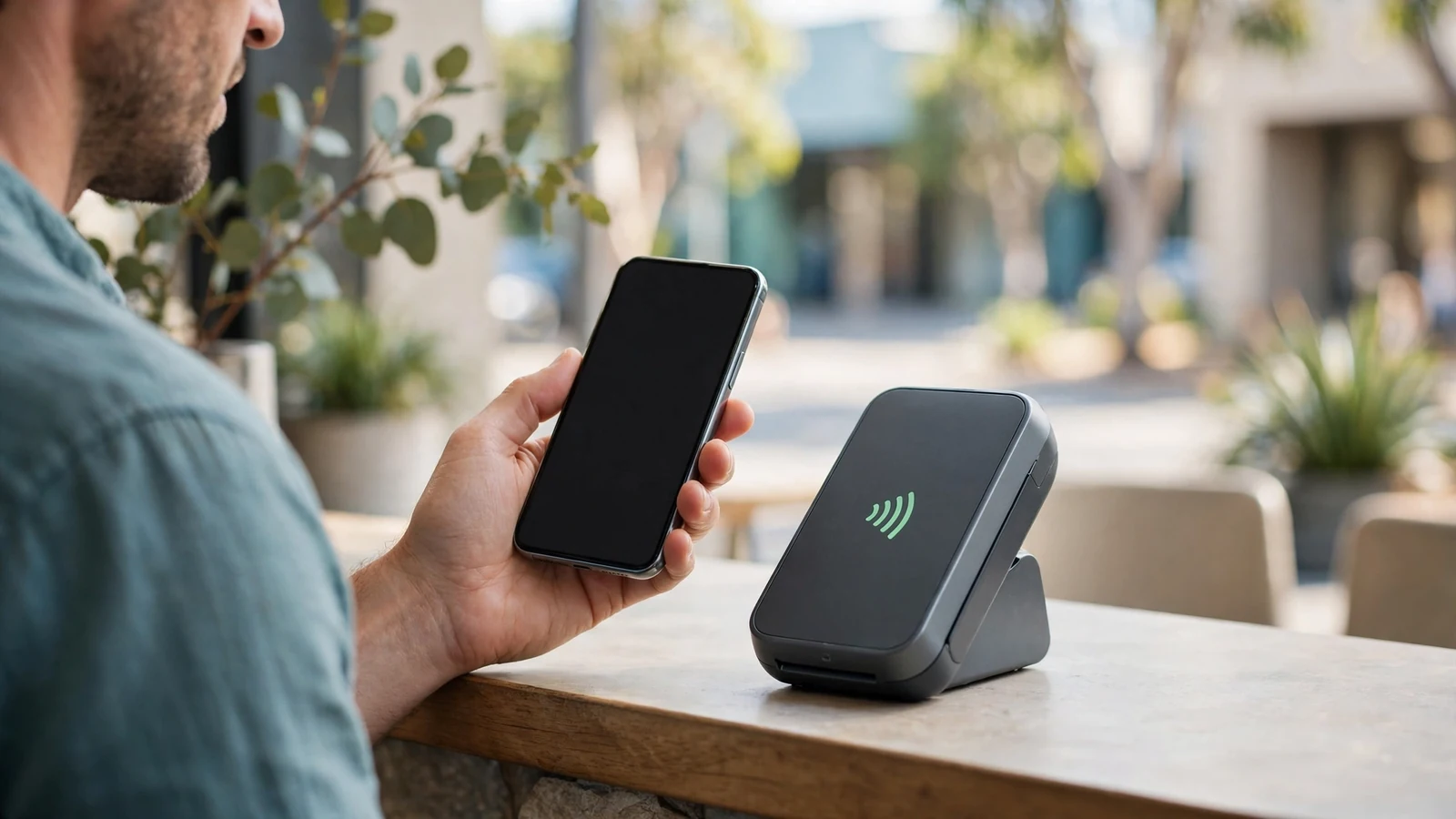
In Australia, tapping a phone to pay has become an ordinary part of public life. Apple Pay and Google Pay are accepted almost everywhere, alongside contactless cards. That familiarity can make the phrase “Australian online casino that accepts Apple Pay” sound as though it describes a straightforward extension of everyday retail payment. It does not. A wallet’s broad acceptance across the country is not evidence that any particular gambling service accepts it.
The distinction is easy to miss because the same wallet can appear in many different settings. A person may use Apple Pay in shops and elsewhere without having any reason to assume that an online operator has enabled the same payment option. Acceptance belongs to the particular business and its payment arrangements, not to the country as a whole. National familiarity is one thing; a specific service’s policy is another.
That is the narrow question behind requests for Australian online casino Apple Pay options: not whether Australians know how to use a mobile wallet, but whether a named operator actually supports it. The first point is established in ordinary life. The second cannot be inferred from it. A page that treats widespread contactless use as proof of casino acceptance collapses two separate facts into one.
Choosing a casino that accepts Apple Pay in Australia means checking what is known about each operator, rather than assuming payment options from a name or licence. Use these notes as a starting point when deciding what to verify before signing up.
SpinsUp
SpinsUp is listed with a Curacao Gaming Control Board licence, OGL/2023/174/0082, held by Dama N.V.
Thor Casino
Thor Casino is licensed in Curacao through Antillephone N.V. (Versus Odds B.V.). Its minimum deposit is EUR 20.
Kingmaker
Kingmaker lists a minimum deposit of A$30. Its stated payout speed is about 90 minutes for crypto and 1–5 days for fiat.
MrPacho
MrPacho lists a minimum deposit of A$30. Its stated payout speed is 30–120 minutes for crypto and 24–72 hours for fiat.
Wild Tokyo
Wild Tokyo is licensed in Curacao. It lists crypto payouts at 30–60 minutes and fiat payouts at 1–5 days, with a minimum deposit of A$10.
JeetCity Casino
JeetCity Casino is listed with a Curacao eGaming licence held by Dama N.V.
Roby Casino
Roby Casino is listed with a Curacao eGaming licence held by Roby Games Ltd.
Playfina Casino
Playfina Casino is listed with a Curacao eGaming licence held by Hollycorn N.V. since 2017. Its minimum deposit is A$20–30, depending on the offer.
Golden Pokies
Golden Pokies is listed with a Curacao licence.
DragonSlots Casino
DragonSlots Casino is listed with a Curacao Gaming Authority licence held by Jumpman Gaming Ltd.
The difference matters because payment labels can be suggestive without being conclusive. Seeing Apple Pay discussed in a general account of Australian payments says something about the local culture of paying: people are accustomed to moving between cards and phone-based wallets. It says nothing, by itself, about an online service’s systems, rules or availability. A familiar logo is not a working payment route.
Nor does the word “Australian” settle the question. It may describe the intended audience of a website, the currency displayed, or the way a service is discussed. None of those descriptions establishes where the operator is based or what payment methods it accepts. The adjective can carry more confidence than the evidence underneath it. A local-sounding label is not a payment confirmation.
This is why broad claims about Australian mobile use need careful boundaries. Apple Pay’s near-ubiquity in the country makes it entirely understandable that people might expect to encounter it in many online settings. But a pattern in everyday commerce does not automatically travel into every industry, and it does not identify the capabilities of an individual site. Convenience in one setting cannot serve as proof in another.
There is also a legal boundary that changes the meaning of the question. The Interactive Gambling Act 2001 prohibits operators from providing real-money online casino games to people located in Australia. Australian consumer law does not protect people using offshore casinos. Those facts are not payment details, but they matter when the subject is framed as finding an online casino for Australian residents. A payment method cannot make a prohibited service lawful or provide consumer protections that do not apply.
The phrase “Apple Pay pokies” can therefore conceal two distinct assumptions: that the service is available to Australians and that Apple Pay is accepted there. Neither follows from the popularity of mobile wallets. The everyday payment habit is real; the leap from that habit to a particular gambling site’s acceptance is not sound. The distinction is less glamorous than a list of convenient options, but it is more useful.
The same caution applies to labels such as “best” or “new.” Those words may imply that suitable services have been compared and that their payment features are known. Without evidence tied to a particular operator, such a description would turn general familiarity with Apple Pay into a recommendation it cannot support. A confident adjective does not repair a missing connection between wallet and site.
So the Australian online casino Apple Pay question has a modest but important answer at this stage: Apple Pay is widely used in Australia, yet that fact alone does not establish acceptance by any specific online casino. The two claims should remain separate unless direct, current information connects them. For a subject with financial and legal consequences, that separation is not pedantry. It is the point.
Attention: The widespread use of Apple Pay in Australian retail does not prove that any specific online casino accepts the method.
Australians move readily between cards, mobile wallets and services connected to bank accounts, including PayPal. That everyday flexibility can make a digital wallet seem like a natural way to fund any online purchase. But familiarity with a payment method is not evidence that a particular merchant accepts it. The distinction matters when the merchant is an online casino and the question is whether a deposit can be made with Apple Pay.
A payment method has to be available at the point where a transaction is started. The fact that Apple Pay is familiar in Australian retail life does not, by itself, establish that an online casino’s cashier offers it. Nor does seeing a wallet listed somewhere on a site settle whether it is available for a particular account, transaction or customer. General habits describe the public; a cashier describes a specific payment arrangement. They are not interchangeable.
That gap affects the practical details people often want before making a deposit. A phrase such as “Apple Pay accepted” would still leave questions about the minimum deposit, any maximum, fees and the currency in which the transaction is handled. None of those conditions can be inferred from the broad use of mobile wallets in Australia. A deposit amount found in one context cannot be carried across to another operator as though it were a market-wide rule. Payment terms belong to the service presenting them.
The same caution applies to searches for a small deposit, including a ten-dollar amount. The amount in a search phrase is not evidence that a casino accepts deposits at that level, or that Apple Pay is available for them. Minimums are conditions, not properties of the wallet itself. Without a current cashier displaying a particular amount and method together, the two claims remain separate: one concerns a proposed deposit size, the other concerns whether Apple Pay is offered.
This distinction is easy to lose because the consumer experience of payment is often seamless. A phone can store a card, a wallet can stand in for entering card details, and a bank-linked service can move money through a familiar interface. From the user’s side, these may all feel like variations on a single act: choosing how to pay. At a merchant’s end, however, the options presented are specific. A payment method being common across Australian shops does not compel an online service to provide it.
Nor is a bank-linked service the same thing as Apple Pay. Australians may be comfortable shifting between cards, mobile wallets and services such as PayPal, but that comfort says something about consumer habits, not about a casino’s deposit menu. Similar-looking routes can have different terms and different availability. Treating them as synonyms would turn an observation about how people pay into an unsupported claim about where a particular payment can be used.
The useful question is therefore narrower than whether Apple Pay is popular. It is whether the relevant cashier expressly presents Apple Pay as a deposit option, and what conditions it attaches to that option. A general payment page may not answer every transaction-specific detail. A logo or broad statement about digital payments may also be less informative than the actual choices shown when a deposit is initiated. The wording matters because payment claims can sound comprehensive while leaving the operative terms unstated.
For an Apple Pay deposit, the important distinction is between evidence of Australian wallet use and evidence of an operator’s current acceptance. One cannot supply the other. The same goes for claims about a “best” casino for Apple Pay deposits: a comparative label does not prove that any named service offers the method, and a ranking would not establish minimums or fees. Without clear, current terms tied to the cashier, such descriptions risk turning a plausible impression into a payment promise.
This is not a technical puzzle so much as a question of scale. At one scale, mobile wallets are part of ordinary Australian payment life. At another, a deposit depends on the particular options and conditions presented by a particular service. Confusing those scales makes the wallet seem more universally usable than the evidence warrants. The phone may be ready. The cashier may not be.
A claim that an online casino accepts Apple Pay is not the same as evidence that it does. The distinction can disappear in a headline, where a wallet logo or a broad statement about payment options may suggest more than it confirms. For a reader trying to identify an Australian site that takes Apple Pay, the important question is narrower: does the claim establish that this particular operator supports the payment method for customers in Australia?
That leaves no defensible basis for ranking sites or calling one the best. A list assembled from unconfirmed claims would turn uncertainty into a recommendation, which is precisely the wrong direction for a payment decision.
Payment claims also have a habit of changing shape as they travel. An operator may be described as supporting a wallet in one place, while a summary elsewhere repeats the statement without showing what it refers to. A logo can be presented beside other payment marks without clarifying whether it applies to every customer, every transaction, or the relevant country. None of those appearances, by itself, settles the question.
There is a useful difference between a general statement and an operational one. “Apple Pay accepted” sounds conclusive, but it may leave out who is eligible and what the cashier actually offers. A more meaningful claim would identify the service, the market and the stage of the transaction it concerns. Even then, wording on a page is evidence of a claim, not a guarantee that the method will be available in practice.
The same caution applies to labels such as “instant” or “best.” They can make an uncertain payment route sound settled, or turn a narrow feature into a verdict about an entire site. A casino might be described as offering Apple Pay deposits, for instance, without that statement establishing anything about another part of the payment process. Speed language is especially easy to overread: a label does not explain what is being timed or which conditions apply.
Account checks add another layer. Online casinos commonly ask customers to complete a Know Your Customer assessment before they carry out financial transactions. That requirement is separate from whether Apple Pay appears in a payment claim. A wallet logo cannot establish that an account is ready to transact, and a completed identity check cannot establish that a particular wallet is accepted. Two different questions; neither answers the other.
Online casinos typically require a Know Your Customer (KYC) assessment before financial transactions can be completed, regardless of the payment method used.
The word “site” can also blur several things together: the operator’s own payment information, a comparison page, a search result, or a third-party review. Their claims do not carry equal weight simply because they use the same confident wording. A statement attributed to the operator is more directly tied to its declared arrangements than a repeated summary, but it still needs to be read for its scope. Promotional phrasing tends to compress conditions; payment decisions benefit from the details it leaves out.
“Best” implies comparison, and comparison requires established criteria as well as dependable information about the options being compared. Without those foundations, a ranking is decoration.
The restrained answer may feel less useful than a neat list of casino websites said to accept Apple Pay. It is more useful than a list whose certainty exists only in its formatting. A payment claim should remain a claim until its meaning and scope are clear; a polished badge cannot do that work for it.
No ranking follows.
“Instant” can describe different stages of a payment, and those stages should not be collapsed into one claim. A payment may be authorised quickly, a balance may be updated, or a withdrawal may be reviewed and sent. None of those descriptions, by itself, confirms that Apple Pay is available as the route for receiving casino funds.
That distinction matters because a familiar wallet icon can make the whole transaction appear seamless. Yet support for making a payment and support for receiving one are separate questions. A casino might display a payment method for one purpose without offering it for another. An advertised withdrawal speed says nothing conclusive about which methods can be used to send the money.
Nor does the word “instant” establish how long a particular withdrawal takes. Without a confirmed Apple Pay withdrawal route and its applicable processing details, a precise timing claim would be guesswork. A fast deposit, if one is described, cannot be used as evidence of a fast withdrawal. The direction of travel matters.
Online casinos commonly ask customers to complete a Know Your Customer assessment before they carry out financial transactions. This identity-checking step can sit between a withdrawal request and any later processing. It is distinct from the payment method itself: completing an assessment does not show that Apple Pay can receive funds, and Apple Pay support would not remove the need for identity checks.
The sequence is easy to blur in promotional language. “Fast payouts” may sound like a promise about the entire journey, while the process can involve separate decisions: identity verification, approval of the withdrawal, and the payment route used to return funds. A statement about one stage should not be read as confirmation of all the others. The label is not the mechanism.
The same caution applies to claims about instant Apple Pay withdrawals. They would need to make clear that Apple Pay is supported for withdrawals—not merely mentioned among deposit methods—and specify what “instant” refers to. If the wording leaves those points unclear, it does not provide a reliable basis for estimating when money might arrive.
Caution: A fast deposit description does not serve as evidence of a fast withdrawal, as the direction of travel and processing requirements differ.
A withdrawal method is not established by a casino’s general reference to mobile wallets. Nor is it established by a payment logo, a rapid deposit description, or a broad claim about processing. Evidence of a withdrawal route would need to address the return of funds specifically. In its absence, an exact Apple Pay payout time cannot responsibly be stated.
There is a small but consequential difference between “the transaction was processed” and “the funds reached the account.” The first may describe an action by the casino or its payment service; the second describes receipt. A speed claim that does not say which event it measures can sound more definite than it is.
For Australian readers, the phrase “instant Apple Pay withdrawal” therefore needs more than an appealing adjective. It needs a clearly identified withdrawal option and terms that distinguish identity checks, casino processing and receipt of funds. Otherwise, “instant” remains a claim without enough detail to interpret. A clock without a starting point is decoration.
Apple Pay is a payment technology, not a legal permission slip. Whether a casino’s cashier displays the wallet does not change the rules governing the service behind it. In Australia, the central legal distinction is between the operator offering online casino games to people in the country and an individual using an offshore site.
The Interactive Gambling Act 2001 makes it illegal for operators to provide online casino games to people physically located in Australia. The prohibition covers real-money casino services, including online poker, slots and table games. It is directed at the provision of the service; the Act does not explicitly make a player’s use of an offshore casino a criminal offence. That distinction matters, but it does not turn offshore gambling into a locally regulated activity.
Enforcement belongs to the Australian Communications and Media Authority, commonly known as ACMA. The authority administers the Act and acts against prohibited interactive gambling services. Its role is not to certify a foreign casino as suitable for Australian customers, nor does a payment option presented on a site amount to approval from ACMA. A wallet can move money. It cannot confer a legal status on the business receiving it.
This is where the appeal of a familiar checkout can obscure the more consequential question. Searches for Australian casinos that accept Apple Pay often begin with the payment symbol: whether a casino takes the wallet, whether a debit card can be linked, or whether the option appears at checkout. Yet payment convenience and legal availability are separate matters. A casino that advertises an Apple Pay route would still be subject to the same boundary if it offers prohibited games to people in Australia.
Nor does the appearance of an offshore service create the protections associated with an Australian consumer transaction. Australian consumer law does not protect people who use offshore casinos. If a dispute arises over an account, a payment, or the handling of funds, the familiar domestic framework may not provide a remedy. The absence of player criminal liability under the Act should therefore not be mistaken for endorsement, oversight, or consumer protection.
Legal Risks
The Interactive Gambling Act 2001 prohibits operators from providing real-money online casino games to people in Australia, and offshore casinos are not covered by Australian consumer law.
There is an old confidence attached to payment brands: a recognisable mark at checkout can make a transaction feel settled before its recipient has been examined. In this setting, that confidence is misplaced. Apple Pay acceptance, even if a particular operator claims it, would answer only a narrow question about payment processing. It would not establish that the operator may lawfully offer online casino games to people in Australia, or that Australian consumer protections apply.
The legal boundary is not a technical detail in the cashier. It sits upstream of the transaction, in the service being offered and the jurisdiction of the person using it. A payment button cannot move it.
A payment icon and a game catalogue answer different questions. Apple Pay may be familiar across Australian retail, but that familiarity does not establish that an online gambling service accepts it, or that any particular transaction can be used for a particular game. A mobile wallet’s presence in everyday commerce is not a map of a cashier’s rules.
Contactless cards and mobile wallets, including Apple Pay and Google Pay, are accepted almost everywhere in Australia. That describes the country’s broader payment culture. It does not show that a casino cashier offers Apple Pay, that the method is available for every transaction, or that a payment route is connected to a particular game. The distinction matters because a label such as “Apple Pay casino games” can make the payment method appear to be a feature of the games themselves.
It is not. A wallet is a means of transferring funds; a game is a separate service with its own availability and conditions. Even where a payment method is accepted by a merchant, that does not by itself establish which services the merchant provides or whether the method can be used for each one. The same principle applies to a mobile casino: a site’s mobile presentation and a phone’s wallet function do not prove a shared technical or commercial arrangement.
This also explains why “paying with Apple Pay” and “playing a game with Apple Pay” are not interchangeable descriptions. The first refers to a payment route. The second may suggest that the wallet is integrated into a game or that it is permitted for a particular kind of play. Neither implication follows simply from the widespread use of mobile wallets in Australia.
In the Australian setting, the distinction is more than a matter of interface design. Payment familiarity cannot make an otherwise prohibited service lawful, nor does it establish that a particular game or transaction is available to people in the country. A cashier can describe payment functionality; it cannot settle the separate question of what a service may provide.
The sensible reading is narrow: Australians widely use mobile wallets, but that general habit does not verify Apple Pay support for casino games, or for a specific payment within them. Familiar technology, separate questions.
In Australia, paying by tapping a card has become ordinary enough to disappear into the rhythm of daily life. Contactless credit and debit cards are accepted almost everywhere, so the plastic card remains a familiar instrument even as its physical presence becomes less necessary. A phone can perform a similar gesture through a mobile wallet, with Apple Pay and Google Pay part of the payment landscape.
That overlap matters. The change has not been a clean passage from cards to phones, with one custom replacing another. Australians are comfortable moving among cards, mobile wallets and services connected to bank accounts, including PayPal. Different routes sit side by side, chosen according to the setting and the payment being made. The wallet on a phone is less a declaration of technological allegiance than another option in a well-stocked pocket.
The habit also explains why a phrase such as “Apple Pay casino” can sound plausible at first glance. Apple Pay is familiar in everyday commerce; tapping a phone is no longer an unusual act. But the familiarity of a payment method in shops says nothing, by itself, about whether a particular online service accepts it. Everyday infrastructure and a website’s cashier are separate arrangements, even when both use the same name for a wallet.
This is the small cultural gap behind the Australian interest in casinos using Apple Pay. The device and the gesture are already legible; the unresolved part is not how a mobile wallet works, but whether a specific service supports it. The national habit supplies context, not confirmation. A familiar tap is not a payment policy.
Cards, phone wallets and bank-linked services therefore coexist without requiring Australians to settle on one preferred instrument. That flexibility can make digital payments feel unremarkable. It can also blur distinctions between a method that is broadly accepted in everyday life and one available in a particular online setting. The two may look like parts of the same payment culture. They are not the same claim.
A payment option shown for adding funds does not, by itself, establish that the same route can carry money back out. That distinction matters when Apple Pay appears in a casino-related payment claim: deposit access and withdrawal access are separate conditions, not two names for one function. The word “available” can conceal that difference rather neatly.
For an online casino with Apple Pay, a claim about withdrawals needs to refer specifically to receiving funds through Apple Pay. A mention of the wallet in a cashier, or a general statement about payment methods, does not answer that narrower question. Nor does the phrase “Apple Pay withdrawal” establish that a casino processes one. Without a clear, operator-specific statement about the return route, the sensible reading is limited: the claim has not established withdrawal support.
Identity checks are another part of the process. Online casinos commonly require customers to complete a Know Your Customer review before carrying out financial transactions. This means a withdrawal is not simply the reverse of a deposit; the operator may first need to assess who is requesting it. The check concerns identity, while the payment route concerns how funds move. One does not verify the other.
That separation also prevents a familiar confusion: a deposit method is not a promise about payout timing. A reference to Apple Pay cannot establish when a withdrawal would be processed, and no general statement about wallet payments supplies a casino’s own processing time. The only dependable timing information would be specific to the operator and the transaction conditions it states.
For Australians, the question is therefore narrower than whether Apple Pay is familiar or widely used for everyday payments. It is whether a particular casino explicitly supports Apple Pay for withdrawals, and what identity checks apply before financial transactions. The cashier’s labels matter; so does the wording attached to them.
A payment route is not a return guarantee.
A claim that a casino lets customers pay for slot play with Apple Pay makes two separate assertions: that the operator accepts the wallet, and that the payment can be used in the stated context. Neither follows from the broad presence of mobile wallets in Australian shops. Apple Pay and Google Pay are accepted widely across the country, but everyday acceptance says nothing about a particular gambling service’s cashier.
That distinction can disappear in compressed descriptions such as “Apple Pay slots” or “slots with Apple Pay”. The wording may suggest that the wallet is built into the game, when payment processing is generally a matter for the operator and its cashier. Even evidence of Apple Pay at a cashier would not, by itself, establish that a particular transaction is available for every purpose or category of play.
The same caution applies to an “Apple Pay casino list”. A list is only as sound as the checks behind it: a wallet logo, a general statement about mobile payments, or acceptance of contactless payments in ordinary retail settings cannot settle the question. Nor does one mention establish that the information remains current. Payment arrangements can be specific to an operator and may change.
In Australia, this distinction carries more weight than a technical footnote. The Interactive Gambling Act 2001 prohibits operators from offering real-money online casino games to people in Australia. A payment claim should not be read as an invitation or as proof that such a service is available lawfully.
The careful reading is therefore narrow: widespread use of Apple Pay in Australia is a fact about the country’s payment habits, not confirmation of Apple Pay support for casino play. The wording may travel further than the evidence.
A bonus and a payment method answer different questions. A promotion may describe who qualifies, what transactions count and what conditions apply; the appearance of Apple Pay in a payment menu would not, by itself, settle any of those points. Nor does a bonus label establish that a deposit made with Apple Pay is eligible.
That distinction matters in Australia, where mobile wallets are part of ordinary commerce. Apple Pay and Google Pay are accepted almost everywhere in the country. Their familiarity in shops and other everyday settings can make a casino-related claim sound plausible, but widespread acceptance is not evidence of a particular operator’s payment or promotion rules.
The phrase “Apple Pay casino bonus” can compress several separate claims: that an operator accepts Apple Pay, that it offers a bonus, and that this payment route qualifies for that offer. Each would need clear, current terms to support it. Without those terms, claims about an Apple Pay bonus, eligibility or promotional conditions should not be treated as established. A headline is not a rulebook.
There is also a legal boundary that promotional language cannot erase. The Interactive Gambling Act 2001 prohibits operators from providing real-money online casino games to people in Australia. Australian consumer law does not protect people who use offshore casinos. A bonus claim does not change either point, and it should not be read as an invitation to participate.
Wallet acceptance belongs to the broad landscape of Australian payments. Bonus eligibility belongs to the specific terms of an offer. Confusing the two turns a familiar payment symbol into a promise it cannot make.
Limits are set by each casino and can vary; Amex limits are usually higher than those for Mastercard and Visa. Check the casino’s cashier or payment terms for its current deposit and withdrawal limits.
Jackpot City Casino, Spin Palace, Ruby Fortune, Ignition Casino, Joe Fortune and PlayAmo are listed as supporting Amex deposits for Australian players. Acceptance may still depend on whether Amex allows payments to the particular website.
Amex deposits typically have no fee, but a casino may add a 1.5% surcharge, and Amex currency conversion can cost 3%. Withdrawal fees may also apply.
Amex deposits are processed instantly. Withdrawals can take up to five days to clear.
Deposits typically have no fee, although a casino may charge a 1.5% surcharge and Amex currency conversion can incur a 3% fee. Withdrawal fees may apply depending on the casino.
Yes. Each casino sets its own Amex deposit and withdrawal limits, so check the cashier or payment terms for the limits that apply. Amex transaction limits are usually higher than those for Mastercard and Visa.