A guide to interpreting venue, airport and district searches without treating listings as verified facts.
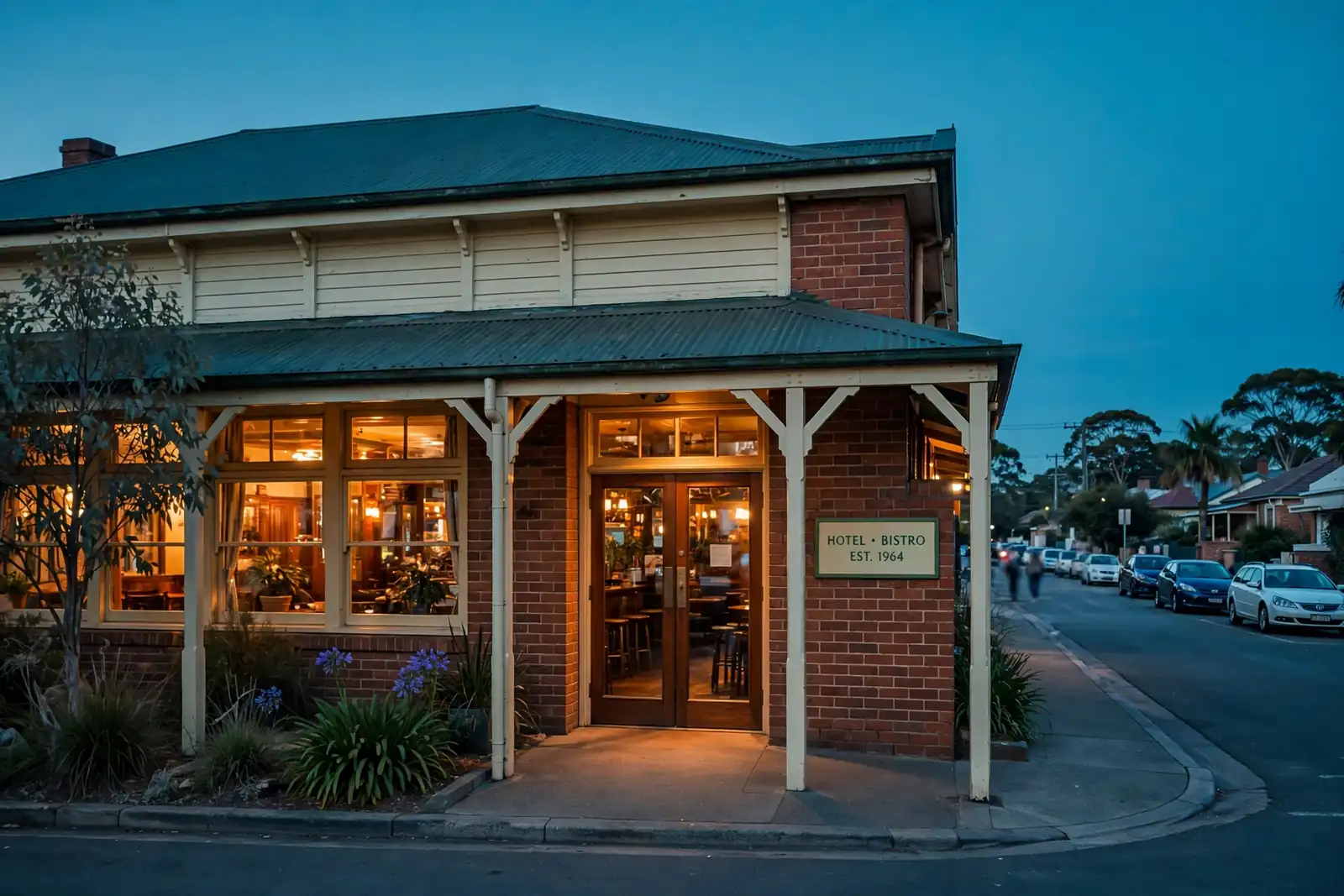
A search for pokies around Sydney can begin with a practical need: finding a place nearby, perhaps while travelling, or narrowing a broad city-wide hunt to a familiar district. The results may look like a map of local options. But a place name, a distance marker or a listing is not, by itself, confirmation that a venue has pokies, that they are available to the public, or that the information is current. A neat pin is not a guarantee.
That distinction matters in a city whose name can cover very different journeys. “Near me” depends on where the search is made; “near central Sydney” may mean a particular station, workplace or hotel to one person and a wider area to another. Airport-area searches have the same limitation: proximity in a result does not establish that a venue is inside the airport, close enough to be useful, or operating machines. These are useful starting points for orientation, not a dependable venue directory.
Choosing pokies in Sydney for 2026 starts with checking the details that matter to you, such as licensing, deposit requirements, and payout information. Use this list as a starting point and verify the current terms before playing.
SpinsUp
SpinsUp lists a Curacao Gaming Control Board licence, OGL/2023/174/0082, held by Dama N.V.
Thor Casino
Thor Casino lists a Curacao licence through Antillephone N.V. (Versus Odds B.V.). Its minimum deposit is EUR 20.
Kingmaker
Kingmaker lists crypto payouts at around 90 minutes and fiat payouts in 1–5 days. The minimum deposit is A$30.
MrPacho
MrPacho lists crypto payouts in 30–120 minutes and fiat payouts in 24–72 hours. Its minimum deposit is A$30.
Wild Tokyo
Wild Tokyo lists a Curacao licence, with crypto payouts in 30–60 minutes and fiat payouts in 1–5 days. The minimum deposit is A$10.
JeetCity Casino
JeetCity Casino lists a Curacao eGaming licence held by Dama N.V.
Roby Casino
Roby Casino lists a Curacao eGaming licence held by Roby Games Ltd.
Playfina Casino
Playfina Casino lists a Curacao eGaming licence held by Hollycorn N.V. since 2017. Its minimum deposit is A$20–30, depending on the offer.
Golden Pokies
Golden Pokies lists a Curacao licence.
DragonSlots Casino
DragonSlots Casino lists a Curacao Gaming Authority licence held by Jumpman Gaming Ltd.
The words can also blur separate kinds of requests. Someone looking for a physical venue may use language that suggests online play, while another person may mean a particular suburb or CBD location. Those are not interchangeable. A result that answers one interpretation may be irrelevant to the other, and a list of online services does not verify anything about nearby premises. The distinction is worth keeping clear before treating a search result as a recommendation.
Nor does “open now” settle whether pokies are operating. A venue’s general opening status and the availability of a particular activity are different claims; a listing may not make that difference clear. Confirming details directly with a venue is more meaningful than inferring them from a map label or a third-party snippet. That is a matter of checking what is actually offered, not assuming that a result has done the work.
There is a social reason to be cautious about the language of “best” and “nearby”. Search systems reward information that can be neatly sorted: distance, popularity, a rating, a photograph. Gambling itself is less tidy. A prominent result may reflect how information is presented online, not the suitability of a venue or the experience someone will have there. Proximity is a measurement, not a judgement.
The legal threshold is straightforward: gambling in Australia, including playing pokies online, is restricted to adults aged 18 and over. That minimum age does not make gambling risk-free, nor does it turn a local listing into an endorsement. It marks who may legally take part; it says nothing about whether a session fits a person’s circumstances.
Responsible-gambling tools are more concrete than vague assurances about control. Deposit limits can set a boundary on money put into play; loss limits can restrict losses; session time limits can place a stop on duration. Self-exclusion offers a way to block access to gambling for someone who decides they need distance from it. These tools do not predict outcomes or remove risk. Their value lies in making boundaries explicit before gambling begins, when decisions are less likely to be shaped by a session already under way.
That is a small but important difference between finding a place and deciding what role gambling should have. The first can be approached as a local-information problem: identify the area, check what a venue itself says, and distinguish a machine listing from a general opening claim. The second concerns personal limits, and no map can answer it.
A search for the best pokies in Sydney may therefore produce a crowded page without establishing which nearby venues have machines or whether a particular listing is accurate. Treating search results as clues, rather than as verified recommendations, keeps their usefulness in proportion. The map can point. It cannot vouch.
The phrase “online pokies in Sydney” can make a screen seem like a local extension of a familiar venue. Legally, though, a game played over the internet is not made domestic by a Sydney label, a local-sounding name or a reference to a city casino. The key distinction is who is offering the game and under what authority.
The Interactive Gambling Act 2001 prohibits companies from offering real-money online pokies to people in Australia without a domestic licence. No such licences have been issued, and Australia has no licensed online casino. That leaves a sharp divide between land-based gambling and casino-style play offered online: the fact that a service is reachable from Sydney does not make it part of Australia’s regulated casino market.
Legal Recourse
If an offshore casino refuses to pay winnings, Australian players have no legal recourse in Australia to compel payment.
The rule is directed at operators, not individual players. Australians are not criminally liable simply for playing on an offshore site that accepts them, and the law does not make the act of playing there illegal for the customer. That point can be mistaken for an assurance of consumer protection. It is not. Permission for a person to play and a reliable legal route to recover money are separate matters.
If an offshore casino refuses to pay winnings, an Australian player has no legal recourse in Australia. The distinction becomes especially important when a site presents itself as a convenient answer to requests for real-money play, a cashless experience or a “no deposit” offer. Those phrases describe a pitch, not the availability of Australian consumer remedies. Nor does a Sydney reference establish that a service is licensed here; there is no domestic online-casino licence to establish.
This is the uncomfortable shape of the arrangement: an individual may legally play on an offshore service that accepts them, while the operator is prohibited from providing the service in Australia and the player cannot turn to Australian courts to compel payment. The law’s focus on the supplier does not quietly create a safety net for the customer. A legal boundary can protect a market without guaranteeing a remedy in every transaction beyond it. A narrow shelter.
Searches for the best-paying pokies in Sydney, or for high-limit play online, often treat the internet as a catalogue of local choices. Yet a city word attached to a website says nothing decisive about the operator’s legal status or the player’s position if a dispute arises. The same is true of names associated with physical venues: a reference to Star Casino Sydney, for instance, cannot by itself verify an online service or connect it to domestic licensing. The setting is a screen; the legal relationship is with the operator behind it.
The practical question is therefore not simply whether a site will accept a deposit or display a game. It is whether Australian law provides a route to enforce a claim if the operator withholds winnings. For offshore casinos, the answer is no. A game may load, an account may open, and a balance may appear on screen; none of those events supplies Australian legal recourse.
That absence matters more than the polished language of a website. Consumer protection is not a colour scheme, a Sydney address in a page title or an assertion that a service is trustworthy. In online gambling, the domestic licensing position is unusually plain: no Australian-licensed online casino exists. Offshore services that accept Australian players occupy a different legal and practical position, even when their pages are designed to feel familiar.
The distinction is worth keeping in view whenever online pokies are discussed alongside Sydney venues. A venue search concerns a physical place; an online casino involves an operator providing a prohibited service to people in Australia. Those are not interchangeable forms of access, and the protections attached to one should not be assumed to follow the other. A local-sounding name cannot bridge the gap.
Licensing Fact
No Australian-licensed online casino exists; services reachable from Sydney are typically offshore operators prohibited from providing services in Australia.
An early opening time can sound like a small convenience, but it is also a claim about two different things: when a venue admits people and when its pokies are operating. Those hours may coincide, but one does not prove the other. A hotel can open for food, accommodation or other business while its gaming area follows a separate schedule. The distinction matters most in the quiet hours, when a sign on the door can seem to answer more than it actually does.
The wish for pokies before breakfast is easy to understand. Shift work, travel and the uneven hours of a city do not fit neatly around the customary evening out. Yet phrases such as “open early” compress several questions into one: whether the premises are open, whether the gaming area is accessible, and whether machines are available at that time. A general venue listing might settle the first question and leave the others untouched.
That is why a claimed opening time should be read narrowly. A venue’s stated hours are not, by themselves, a machine timetable. Nor does a late closing claim establish that pokies continue to operate until the doors close. The useful detail is an explicit statement about machine operating hours, ideally confirmed by the venue rather than inferred from its broader business hours. Without that distinction, “open” does too much work.
Small word. Large assumption.
Early-morning searches can also be shaped by a habit of treating Sydney as one continuous entertainment district. In practice, a city’s hours are not a single civic clock. Different businesses serve different routines, and even a venue with long opening hours may not make every part of its operation available throughout them. A hotel label, for instance, describes a kind of establishment, not a guaranteed schedule for its pokies.
The same caution applies at the other end of the day. “Open late” and “open till dawn” are not interchangeable descriptions, and neither establishes the hours of the machines. A closing time can refer to the venue as a whole; a machine schedule concerns a particular activity. The difference is mundane, almost bureaucratic, but it is exactly the sort of distinction on which a wasted trip depends.
There is a further sign that machine operation is treated as a specific responsibility rather than a decorative detail. A report by regionriverina.com.au says that, from 1 July, venues with more than 20 gaming machines must have a dedicated responsible gambling officer on duty while those machines are operating. The point is not that this officer supplies a public timetable. It is that the operating period has practical significance: oversight is tied to the time the machines run, not simply to the time the building is open.
Opening hours also tell nothing about a pokie’s return percentage. A schedule describes access, not the game’s settings or the outcome of an individual spin. That is a separate question, and a busier or earlier hour does not make a machine more generous. The clock is not a strategy.
For anyone trying to establish whether a particular Sydney venue has an early machine schedule, the clearest evidence would be a direct statement of those hours from the venue itself. General opening listings, hotel descriptions and late-night labels should not be treated as substitutes. A search result can point toward a door; it cannot, on its own, certify what is running behind it.
A return-to-player percentage can look like a neat answer to an untidy question: which pokie gives more back? It describes a game’s theoretical return across play, not a promise about what happens during a particular session. That distinction matters in Sydney as much as anywhere else. A percentage attached to a game cannot tell anyone whether the next spin will win, or whether a run of losses is about to end.
There is another complication: the game name alone may not identify its return setting. A specialist review reports that some providers give casinos a choice of different RTP settings for the same pokie. If that account applies to a particular game, two versions carrying the same title could have different stated return percentages. The provider’s name and the machine’s theme, then, are not enough to establish the setting in use.
That makes claims about the “best-paying” pokies difficult to assess without precise information about the particular machine and its configuration. A figure found beside a game title may not describe every version bearing that title; nor does a figure, by itself, establish what is installed at a Sydney venue. A list of popular games would not answer the question. Popularity is not a return setting.
The mechanics of a spin place a firm limit on what the percentage can tell. Each pokie spin is a separate random event determined by a Random Number Generator. The result of one spin does not become more likely because earlier spins paid out, or because they did not. A machine has no memory in the human sense. The screen may tell a story; the next result does not owe that story an ending.
The percentage is therefore about an aggregate theoretical return, not a personal forecast. It cannot be read as the share of a particular person’s stake that will come back in a short visit. Nor can it show the timing of wins, the size of any individual result, or how long a session might last. Those are precisely the details people often want a single percentage to settle. It cannot.
For anyone comparing claims about Sydney pokies, the useful questions are narrower: does the figure refer to the exact game version, and is the setting identified clearly? Without that connection, a headline percentage is a label without enough context to compare machines. Even a clearly stated setting remains a theoretical measure, not a guarantee of a better outcome.
The phrase “best pokies in Sydney” sounds as though a ranking could settle the matter. Return percentages do not make that ranking reliable on their own. The same title may have different settings, and independent random spins prevent a theoretical return from predicting an individual result. A number can clarify one feature of a game. It cannot turn chance into a schedule.
That limitation also applies when the subject shifts from machines in venues to online games. A return figure is not evidence that a service is lawful, or that a particular game configuration is available in Sydney. It describes one aspect of a game, nothing more. A percentage is not a promise.
An airport is a place people pass through; North Sydney is a place people may work, live or visit. Those different rhythms help explain why both attract interest from people looking for pokies. They do not, by themselves, identify a particular venue or establish where machines are located.
Attention A search result for "near the airport" or "North Sydney" does not verify that machines are actually located inside those specific premises.
The distinction matters most around an airport. A search for pokies near Sydney Airport can sound like a request for a practical stop between flights, but the name of the transport hub is not a venue listing. Nor does the phrase “in the airport” establish that machines are inside the airport itself. Nearby and within are different claims, even when a search results page makes them look interchangeable.
North Sydney carries a different kind of ambiguity. A district name can cover many kinds of premises and many reasons for being there; it cannot show that any particular place has pokies. A result associated with North Sydney may also refer to the wider area rather than a specific address. Turning the district label into a recommendation would make geography do work it cannot do.
That problem extends to searches for pokies in Sydney city. The city is often treated as a single destination in casual language, although a broad label cannot tell whether a venue exists at a particular point, whether it has machines or what arrangements apply there. A pin on a map, a venue name and a confirmed machine location are not the same thing.
There is a small social history in this habit of searching by place. People organise leisure around the routes they already travel: a commute, a flight, an appointment, an evening out. The search compresses that itinerary into a few words. Useful shorthand, perhaps. Not proof.
The wording about a maximum cash payout raises another question, but location cannot answer it. A suburb or transport landmark says nothing about the maximum payout of a particular pokie. That is a machine-specific matter, not a feature that can be inferred from being in Sydney, near the airport or in North Sydney. Without details tied to an individual machine, a figure would be guesswork.
The broader legal setting also shapes what these searches can mean. In Australia, the legal age for gambling, including online pokies, is 18. The Interactive Gambling Act 2001 prohibits operators from providing real-money online casino games to people physically in Australia. That rule concerns online services; it should not be confused with claims about the presence or location of machines in physical venues.
Place names are tempting because they promise certainty at a glance. Yet an airport label, a city label and a district label each leave the central question unanswered: which venue, and where exactly? A careful local description would need to distinguish those things rather than letting a familiar name stand in for them. A name is not a map.
Crown’s name carries a ready-made image: a large, polished destination where every room seems to have its own atmosphere and purpose. That image can make claims about pokies feel more certain than they are. A venue’s prominence does not, by itself, establish what machines it has, where they are situated, when they operate or what facilities surround them.
Nor does the phrase “best pokies room” settle what best means. It might refer to the setting, the range of machines, accessibility or something more personal. Those are different questions, and a confident ranking can blur them into a single verdict. Without reliable details tied to the venue, claims about its particular machines or rooms should not be treated as established.
Venues with more than 20 gaming machines must have a dedicated responsible gambling officer (RGO) on duty during machine operation and maintain a gambling incident register to record patrons at risk of harm.
There is a more useful way to frame the question: what responsibilities apply to a venue if it operates a substantial number of gaming machines? A report by regionriverina.com.au says that, from 1 July, a venue with more than 20 machines must have a dedicated responsible gambling officer (RGO) present while those machines are running. The report also describes a one-month grace period for venues to remove signage and put the officer arrangement in place.
That requirement concerns the operation of the machines, not a venue’s reputation or the impression created by its name. It also does not establish that a particular room is better, quieter or safer than another. Oversight is a duty attached to qualifying venues; it is not a quality badge.
The same report says venues will be required to keep a gambling incident register. It is intended to record events that may indicate a patron is at risk of gambling harm or is already affected by it. Such a record turns a moment that might otherwise pass as private distress into something the venue is expected to notice and document. That is a meaningful shift in what responsible service asks of staff and management.
Still, an incident register is not a promise that harm will be prevented, nor does the existence of a rule reveal how a particular venue applies it. The distinction matters. Regulation can set duties; it cannot substitute for evidence about a specific room, machine or operating practice.
Sydney’s grand venues invite grand claims. The more useful account is narrower: venue-specific descriptions require venue-specific evidence, while NSW’s reported oversight measures set a broader standard for qualifying machine venues. A celebrated name is not a set of particulars.
A venue’s responsibility is measured not only by the machines it operates, but by what it does when gambling stops looking like recreation. In New South Wales, a reported change places a specific duty on larger venues: from 1 July, any venue operating more than 20 gaming machines must have a dedicated responsible gambling officer (RGO) on duty whenever those machines are running.
That threshold matters. The rule is not described as a general staffing requirement for every place with pokies; it applies to venues above the stated machine count. Nor is the officer’s presence simply a name on a roster while the room operates. The duty connects staffing to machine operating hours, making the RGO part of the venue’s response while gambling is taking place.
The timing and transition arrangements have been reported by regionriverina.com.au. Its account says venues are allowed a one-month period to take down signage and put the responsible gambling officer arrangements in place. That interval is a practical bridge, not a permanent exemption: the reported expectation is that the new arrangements follow the transition. The report does not turn this into a Sydney venue directory, and the rule itself offers no basis for calling one place the best pokies venue in Sydney.
A second duty concerns what happens after staff notice a worrying incident. Venues are to maintain a gambling incident register, recording occurrences that may indicate a patron is at risk of gambling harm or is already affected by it. The register makes such moments more than passing impressions. It creates a record of incidents, rather than leaving the venue’s response to memory or informal conversation.
There is a social history in this kind of paperwork. Gambling has often been treated as a private pastime, even when it takes place in shared rooms designed around machines and their steady invitation to continue. A register gives the venue a formal role in recognising harm; an officer gives that role a person on duty. Neither measure makes gambling harmless, but both acknowledge that responsibility does not rest solely with the person playing.
For anyone comparing Sydney pokies venues, these requirements describe duties attached to qualifying venues, not a quality rating. The presence of an RGO or an incident register cannot establish that a particular venue is safer in every respect, and the stated threshold does not apply indiscriminately. It does, however, mark a shift from treating gambling harm as invisible until a crisis becomes undeniable.
Paperwork is not care. But it can make neglect harder to pass off as nobody’s concern.
“24-hour pokies” sounds like a simple promise: a venue, a machine and an open door at any hour. In practice, those are separate things. A venue may have its own opening schedule, while access to particular facilities or activities can be governed by different hours. A label that describes the venue as open all night does not, by itself, establish when pokies are operating.
That distinction matters most in the small hours, when a phrase such as “open now” can feel more definite than it is. Opening hours can change, and a general venue listing is not the same thing as a current operating timetable for its machines. The language of convenience compresses all of this into one neat category. The timetable does not become simpler for having been compressed.
There is also a social contradiction in the idea of the all-night pokie: a pastime presented as leisure, available without regard to the ordinary rhythms that limit other activities. Convenience is an appealing public word. It can also make time feel weightless, even when the hours spent gambling are not.
Responsible-gambling tools address that more personal measure of time and money. Deposit limits can place a boundary on funds added; loss limits can set a threshold for losses; session time limits can interrupt a stretch of play. Self-exclusion offers a stronger barrier by restricting access to gambling. These tools do not confirm a venue’s hours, and an opening schedule does not substitute for them. Different questions, different safeguards.
For pokies, the distinction between a venue’s doors and a machine’s operating hours is therefore more than administrative. The first concerns access to a place; the second concerns when gambling is available within it. A polished listing may make them appear interchangeable, but a label is not a timetable.
“Open now” is a momentary description, not a standing assurance. The phrase “24-hour” is broader still: it suggests continuity, while saying little about the exact service meant. In Sydney, as anywhere, the useful detail is the actual schedule for the venue and its pokies—not the impression created by an all-night label. A clock, at least, is less poetic and more precise.
Sets a boundary on the total amount of money put into play.
Restricts the total amount of money that can be lost.
Places a stop on the duration of a gambling session.
Blocks access to gambling for those who need distance from it.
CBD clubs can seem to offer a simpler kind of leisure than the city around them: a meal, a drink, perhaps time beside a pokie. Yet the social setting does not make gambling risk disappear. A familiar room and a routine visit can soften the sense of money leaving, which is one reason practical limits matter more than a venue’s atmosphere.
Responsible-gambling tools work by putting boundaries around different parts of play. A deposit limit caps the amount transferred for gambling; a loss limit focuses on what can be spent and lost; a session time limit places a boundary on duration. They are not interchangeable. Someone may stay within a spending limit while playing longer than intended, or stop at a set time after losing more than planned. Each tool addresses a different way a session can expand.
Self-exclusion is different again. It is a decision to block access to gambling for a period or longer, rather than merely setting a ceiling for one session. In a city where clubs, transport and entertainment sit close together, that distinction has a practical weight: the surroundings can make returning feel effortless, while a deliberate barrier makes the pause harder to ignore.
These measures are safeguards, not predictions. A limit cannot make a pokie favourable, and a time boundary does not alter the outcome of a spin. Nor does the presence of a tool establish how a particular club applies it. The useful question is not whether a venue sounds polished or popular, but whether the limits relevant to a person’s own pattern are clear and usable.
There is a quiet tension in the idea of a club as both social refuge and gambling setting. Clubs were built around belonging; machines turn some of that shared time into private, repetitive decisions. The safeguards are modest, but their purpose is plain: to keep a chosen boundary from being swallowed by the room’s ordinary rhythm.
A limit is not a cure. It is a line.
A request for pokies in Parkes alongside Sydney can point in more than one direction. Parkes may be intended as a distinct destination, or as a place name attached loosely to a broader search for Sydney venues. The wording alone does not resolve that geography, and it cannot establish that a particular venue or machine is located there.
That distinction matters because a place name can make a result feel local before its details have been checked. A page that pairs Parkes with Sydney is not, by that association alone, a directory of either area. Nor does the phrase “best pokies in Sydney” turn an unsubstantiated location into a useful recommendation. The attractive certainty of a short label is not the same thing as evidence.
Pokies are part of a wider Australian habit of organising gambling around physical venues, with rules and oversight attached to the setting as well as the activity. But a broad search phrase says little about the individual venue behind it. A place name is a starting point, not a floor plan. Dry, but important.
The national baseline is clearer than any local guesswork: the legal age for gambling in Australia, including pokies, is 18. That does not make every location-specific claim reliable; it simply sets a basic boundary for participation. For someone comparing places, the meaningful details would be concrete ones tied to an actual venue, rather than a suggestive combination of city names.
There is a small social history in these searches. People often use familiar landmarks or place names as shorthand for the kind of outing they have in mind, while digital listings compress geography into a few words. The compression is useful until it obscures the difference between a city, a destination and a nearby district.
So a Parkes reference should not be treated as proof of a Sydney location, or as a basis for ranking local pokies. The phrase expresses an intended area; it does not, by itself, identify a venue. A modest distinction, with practical consequences.
Yes, Australians are not criminally liable for playing on offshore sites that accept them, but those operators are prohibited from offering real-money online pokies in Australia without a domestic licence. No such licences exist, and players have no legal recourse in Australia if an offshore casino refuses to pay.
You must be at least 18 years old to gamble online in Australia.
It is the amount you must bet before bonus winnings can be withdrawn, usually expressed as a multiplier. For example, a $500 bonus with a 40x requirement means wagering $20,000 before withdrawing winnings.