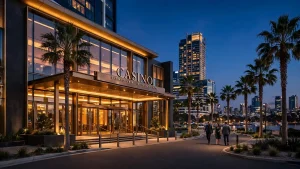
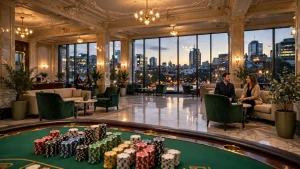
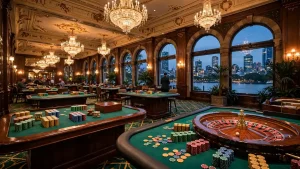
Room value depends on dates, booking terms and included extras, while gaming, dining and facilities call for separate checks.

A casino hotel joins two kinds of time. The room belongs to the ordinary itinerary: arrival, sleep, a shower, departure. The casino floor belongs to a more elastic one, where an evening can stretch because there is always another game, another table, another reason to postpone leaving. A stay in Queensland that combines a hotel and a casino therefore asks a practical question beneath the glamour: does the accommodation suit the trip, whether or not the gaming does?
The label “casino hotel” can make a property sound like a single attraction. In practice, a room is still a room, and its value depends on the details that shape any stay: the dates, the room category, the booking conditions and what the quoted rate includes. A lower headline price is not automatically the better arrangement. A flexible cancellation policy may matter more than a small saving; a package may be useful only if its inclusions fit the plans already made. The arithmetic is personal, though the fine print is not.
Choosing an online casino while in Queensland means checking the details that matter to you before signing up. This list offers a concise reference to the information available for each operator.
SpinsUp
SpinsUp lists a Curacao Gaming Control Board licence, OGL/2023/174/0082, held by Dama N.V.
Thor Casino
Thor Casino lists a Curacao licence through Antillephone N.V. (Versus Odds B.V.) and a minimum deposit of EUR 20.
Kingmaker
Kingmaker lists crypto payouts at around 90 minutes and fiat payouts in 1–5 days. Its minimum deposit is A$30.
MrPacho
MrPacho lists crypto payouts in 30–120 minutes and fiat payouts in 24–72 hours. Its minimum deposit is A$30.
Wild Tokyo
Wild Tokyo lists a Curacao licence, crypto payouts in 30–60 minutes, and fiat payouts in 1–5 days. The minimum deposit is A$10.
JeetCity Casino
JeetCity Casino lists a Curacao eGaming licence held by Dama N.V.
Roby Casino
Roby Casino lists a Curacao eGaming licence held by Roby Games Ltd.
Playfina Casino
Playfina Casino lists a Curacao eGaming licence held by Hollycorn N.V. since 2017. Its minimum deposit is A$20–30, depending on the offer.
Golden Pokies
Golden Pokies lists a Curacao licence.
DragonSlots Casino
DragonSlots Casino lists a Curacao Gaming Authority licence held by Jumpman Gaming Ltd.
That is the sensible way to read offers associated with a Queensland casino hotel. A deal is not a quality in itself but a bundle of conditions. The important distinction is between what is promised and what is merely suggested by a photograph or a broad description. Room type, bed configuration, views, check-in arrangements, cancellation terms and any included extras all belong to the comparison. If the terms are difficult to find, the apparent bargain has already acquired a cost: uncertainty.
The hotel experience also changes according to why the trip is being made. For a short city break, convenience may outweigh space. For a longer visit, a room that feels comfortable between outings may matter more than proximity to the casino floor. A business traveller may value quiet and a dependable place to work; a couple may care about the room as part of the occasion. None of these preferences is universal. “Best” is often a word doing the work of a missing question.
There is a small social history inside the casino hotel. The grand hotel once announced that travel could be made into an event: not merely reaching a place, but entering a setting designed to hold attention. Casino resorts extend that idea by placing accommodation beside entertainment, so that the transition from evening to rest can seem almost frictionless. That convenience is real as a design intention, but it does not decide whether a particular stay is worth its price. Design has its own sales pitch.
For anyone comparing casino hotel rooms, the useful approach is to compare like with like. Dates should match; room categories should match; and the total conditions should be read alongside the nightly rate. A package that includes something unwanted is not necessarily a saving. A rate that looks attractive but cannot be changed may be a poor fit when plans remain uncertain. The booking page, rather than the phrase “special offer,” carries the meaningful detail.
The same care applies to expectations. A hotel attached to a casino is not automatically a resort in every sense, and the name alone does not establish what facilities or services are available. The stay should be judged by what the chosen room and booking actually provide, not by an imagined version of casino glamour. Hospitality is most convincing when it stops asking to be admired and simply works.
Queensland’s casino stays are best considered as accommodation first and atmosphere second. The gaming may be the reason a destination enters the itinerary, but a good room earns its place in a quieter way: by fitting the purpose of the visit, the budget and the terms of the booking. That is less dazzling than a promise of luxury. It is also more useful.
A poker room and a poker machine floor belong to different parts of casino life. Poker is played against other people; a machine game is played against software. The distinction matters in Queensland, where a search for live poker or a tournament can easily be mistaken for a question about pokies, though the games, rules and social arrangements are not interchangeable.
Legal Restrictions
The Interactive Gambling Act 2001 prohibits operators from providing real-money online casino games, including poker and pokies, to people in Australia.
A dedicated poker room suggests more than tables: it implies a regular setting for players to meet, compete and return. A tournament adds its own structure, with an organised field and an agreed format. Those ideas are easy to picture, but they should not be turned into claims about a particular Queensland venue without reliable details. The phrase “poker at a Queensland casino” describes an interest, not proof of a room, tournament calendar, entry conditions or current availability.
That caution is not mere tidiness. Casino buildings gather activities that look similar from the outside but are governed differently. Poker played in person is not the same thing as online poker, and neither is the same as electronic gaming machines. A room name, a tournament listing and a machine-game rule answer different questions. Confusing them produces a tidy answer to the wrong problem.
The distinction becomes especially important online. The Interactive Gambling Act 2001 prohibits operators from providing real-money online casino games to people in Australia. That category includes poker as well as pokies, blackjack and roulette. The law concerns the provision of interactive gambling services; it does not, by itself, establish whether a Queensland casino runs a physical poker room or hosts a live tournament.
Nor should rules from another state be carried across the border by assumption. In New South Wales, the legal age for poker-machine gambling is 18, and mandatory pre-commitment systems require players to set a loss limit before play. Those are NSW rules about poker machines. They do not describe Queensland poker rooms, tournament entry or the conditions at a Queensland venue.
The language itself can blur the boundaries. “Casino rooms” may mean hotel accommodation, a gaming room or a poker room; “sports bar” points to another kind of venue space altogether. A search for a casino poker tournament is more precise, but still leaves practical questions: whether the event is scheduled, what format it uses, and whether registration is open. Those details change, and a general label cannot stand in for a current event notice.
There is a small social history in the difference. Machine play is organised around an individual and a device; poker makes the table, its rules and its other players visible. That visibility can make poker seem more legible, even more communal. It does not make every game a tournament, or every casino room a poker room. A felt table is not a schedule.
For anyone comparing venues, the useful distinction is between a confirmed event listing and a broad description of casino facilities. A dated tournament notice can establish that a particular event is planned; a general reference to poker cannot establish its timing or terms. Likewise, an online poker offer should not be treated as the digital version of a physical room: Australian law restricts operators from supplying real-money online casino games, including poker, to people located in Australia.
The cleanest way to read these terms is literally. Poker room means a place for live poker only when the venue identifies one; tournament means an organised competition only when its details are published. Pokies remain a separate category, and NSW machine safeguards do not become Queensland poker rules by proximity. The distinctions are less glamorous than a tournament table. They are more useful.
Breakfast, a buffet and a rewards programme belong to different parts of a casino visit, though they are often folded into one idea of a resort experience. The distinction matters. A meal is a service with a menu and a time; a buffet is a particular way of serving food; a rewards scheme is a set of conditions attached to participation. The word “resort” can gather these expectations under one polished label, but it does not establish what any individual venue provides.
For a Queensland casino breakfast, the useful details would be practical rather than lavishly phrased: what is served, when the service operates, whether it is available to non-guests, and how the price is presented. A buffet breakfast raises further questions about the range of dishes and whether the offer is fixed or changes. Those details should come from a current venue page or direct confirmation, not from the assumption that every casino resort follows the same pattern.
A buffet is not simply a larger breakfast. It describes a service format, not a guarantee of variety, quality or value. A listing that uses the term without explaining the meal leaves the important part unsaid. The same applies to photographs: they can suggest atmosphere, but they do not settle what is included on a particular day. Food has its own small politics of expectation. “All you can eat” sounds like abundance; the actual arrangement is made of dishes, hours and conditions.
Rewards require a different kind of attention. A casino loyalty programme, where one is offered, should explain how members qualify, what activity earns benefits, how those benefits can be used, and whether restrictions apply. A name or membership card alone says little about value. The conditions are the substance. In particular, promotional language should not be mistaken for a standing entitlement: an offer may be limited, conditional or tied to particular services.
This is why “casino rewards” and a breakfast offer should not be treated as interchangeable. A dining promotion might be separate from a broader membership scheme, or the terms might define who can use it and when. The distinction should be plain in the wording. Fine print has a talent for changing the apparent generosity of a headline.
Searches about a Queensland casino resort can also blur the hotel stay, dining and membership into one imagined package. Each element needs its own description. A room does not establish that breakfast is included; a buffet listing does not establish that it is part of a room rate; and a rewards programme does not, by its name alone, establish a dining benefit. Clear terms prevent the resort label from doing more work than the details can support.
Employment searches sit outside this hospitality picture. A casino job is not an amenity, and a venue’s public-facing services do not reveal whether it has vacancies. A meaningful listing would identify the employer, role, location, duties and application process. Vacancies change; an old listing can remain visible long after the work has disappeared. That is a less glamorous kind of housekeeping, but a necessary one.
Breakfast is a meal, a buffet a format, and rewards a contract in miniature. The names may sit together in a travel plan. Their terms should not.
Parking is a practical question about a physical venue: where a car can be left, whether valet service exists and whether parking is free. Those details cannot be inferred from the word “casino” or from a Queensland location. Without confirmed venue information, claims about spaces, fees or services would turn a useful travel detail into guesswork.
Parking details, such as valet availability and fees, should be confirmed directly with the venue as they cannot be inferred from the location alone.
The same care applies to getting to a casino in Queensland. A map pin, a parking sign and a valet desk are different things; one does not establish the others. Anyone comparing venues should distinguish confirmed arrangements from assumptions, particularly where the cost or availability of parking could affect a trip. The word “free” is not a small embellishment when it changes the plan.
Dining searches belong to another practical category. Parking can shape how a visit begins, but it says nothing about restaurants, meals or other facilities. Keeping those questions separate makes it easier to assess what is actually known about a venue, rather than allowing one search result to stand in for an entire visit.
The phrase “online casino” describes something different from a casino building. In Australia, the Interactive Gambling Act 2001 prohibits operators based in Australia from providing real-money online casino games to people in the country. That includes pokies, blackjack and roulette. A physical venue’s existence does not make an online version lawful, and a Queensland setting does not create a separate exception.
Offshore platforms sit in a different legal position, but not a simple one. Australian players are not criminally liable merely for using such a platform; however, offshore services are not regulated under Australian law, and offering prohibited online casino services to people in Australia remains unlawful for operators. “Technically accessible” and “locally regulated” are not synonyms. Nor does the lack of player liability turn an offshore site into an Australian-licensed service.
That distinction matters when a request for an online casino in Queensland is treated as though it were just another way to find a local venue. A physical casino involves travel and questions such as parking. An online casino involves a prohibited service framework for operators serving customers in Australia, alongside the limited protections of a market outside domestic regulation. The two meanings should not be blurred by a shared place name.
For the current search for the best casino in Queensland, 2026, the useful dividing line is straightforward: check practical travel details as venue-specific information, and do not mistake online availability for Australian authorisation. Parking arrangements require direct confirmation from the venue; they cannot be supplied by assumptions about Queensland casinos generally. Online casino games, meanwhile, are not a lawful service for Australian-based operators to offer to people in Australia. Different questions. Different rules.
“Near” can mean a short walk, a brief drive or simply the same urban area. For accommodation searches around a Queensland casino, that difference matters more than a headline deal. Queensland is a large state, and a state-level label does not identify a neighbourhood. The venue’s precise location should be established before comparing places to stay; otherwise, a low nightly rate can conceal a long transfer.
Nearby accommodation is also a different choice from a room inside a casino complex. A separate property may suit someone who wants the casino as one stop in a wider visit, or who prefers to keep lodging and entertainment distinct. The practical question is not which arrangement is universally better, but how the location fits the rest of the trip: other appointments, public transport, walking routes and the time of arrival or departure.
Distance deserves careful reading. A map may show a route that is short in kilometres but awkward on foot, while a property described as “nearby” may be more convenient by car than on foot. Compare the actual route with the property’s description, and note whether the estimate is for walking or driving. A pin on a map is a starting point, not a promise about access.
Comparing Accommodation
Establish Location
Identify the precise location of the casino to distinguish between nearby properties and on-site lodging.
Match Parameters
Use identical travel dates and occupancy for all compared properties to ensure a fair comparison.
Verify Total Cost
Review the final amount including taxes and cancellation terms rather than relying on the initial headline rate.
The same restraint applies to accommodation deals. A reduced headline rate is only one part of the booking terms. The total cost can depend on dates, room type, cancellation conditions, taxes and other charges disclosed during booking. A deal that cannot be changed may be a poor fit where travel plans are unsettled; a more flexible option may carry a different price. The comparison is clearest when the same dates and occupancy are entered for each property, and the final amount—not the first figure displayed—is considered.
Promotions associated with a casino should not be confused with accommodation discounts. A casino promotion may have separate eligibility rules and conditions, and its presence does not establish that a nearby hotel is offering a lower room rate. The two offers can be assessed independently: one for lodging, the other for whatever activity its terms describe. No bargain becomes simpler merely because it has been placed beside another.
Location also shapes the feel of a stay. A room farther from the venue may offer a quieter base or easier access to other parts of town; one closer by may reduce the distance between planned stops. Those are possibilities to weigh against the route, transport and booking terms, not qualities that can be assumed from a property’s label. “Close to the casino” is a description, not a measure.
For anyone comparing accommodation around a Queensland casino, the useful shortlist begins with the venue’s location, then separates nearby properties from on-site lodging and compares the same travel dates. The final check is mundane and valuable: route, total price, cancellation terms and what the listing actually includes. A deal is only as good as its details.
A request for a Queensland casino’s contact number looks simple until several directories offer different answers. A number copied across travel pages may be old, belong to a group office rather than a venue, or lead to a department that cannot answer questions about a particular service. The useful distinction is not between a polished and an untidy listing, but between information issued by the venue itself and information repeated elsewhere.
The same care applies to a map. A pin can locate a broad site without showing which entrance, service desk or building a visitor needs. A map label is not a substitute for checking the venue’s own current directions and contact information. Where a listing cannot be matched to an official channel, it should be treated as a lead, not as confirmation.
That is less convenient than a single definitive number. It is also less likely to send someone in circles.
Questions about a casino bar carry a different kind of uncertainty. A listing might establish that a bar exists, but say little about its present service, access conditions or relationship to the gaming floor. Those details can change, and a photograph or old review does not settle them. A careful check should establish whether the information comes from the venue, and whether it is current, rather than assuming that every online description applies to every Queensland casino.
Concert searches invite a similar leap from possibility to promise. A past performance does not confirm a future programme; a general entertainment listing does not establish that a particular venue is hosting an event. Dates, admission arrangements and ticketing belong to the current event notice, not to a recycled summary. There is no virtue in turning a venue’s broad entertainment reputation into a claim about a specific night.
Some searches name table games such as baccarat or craps. The name of a game, however, does not prove that it is offered at a particular Queensland venue, nor does it establish its format or availability. Those are venue-specific details. They should be confirmed through an official channel rather than inferred from what casinos elsewhere may provide.
The distinction between venue information and online gambling matters in Australia. Under the Interactive Gambling Act 2001, operators may not provide real-money online casino games, including table games and pokies, to people in Australia. A web page describing a physical venue’s contact options or entertainment is not, by itself, permission to offer online casino play. The boundary is legal, not merely a difference in wording.
A sensible information trail therefore stays narrow: use a venue’s own contact and map material for practical details, and look for event-specific notices when the question concerns a performance. Third-party listings may help identify what needs checking, but they should not be treated as the final word on a phone number, a bar or a concert. The small inconvenience of confirmation is preferable to a confident answer attached to the wrong place.
“Open” is a small word carrying several different questions. It may mean that a physical venue is operating, that a particular service is available, or that a planned reopening has actually taken place. Those are not interchangeable statuses. A dated notice from the venue or the relevant authority is more useful than an undated directory entry, especially when a closure or reopening is the point at issue.
The same care applies to events. A calendar listing can describe a scheduled performance or gathering; it does not establish that the event is still going ahead. Dates, cancellations and changes belong to the present tense, and old listings can linger after the event has passed. Entertainment searches are best treated as requests for a current programme, not as evidence that a particular act or event is confirmed.
Development has a longer clock. A proposal, an approval, construction and an operating project are separate stages, though public discussion can compress them into a single claim that a casino is “being developed”. Employment notices require similar caution: a past vacancy does not show that a position remains open, and a general mention of jobs does not confirm a current recruitment round. For anyone assessing a claim, the distinction between announcement and completed change matters more than confident wording.
A menu is another moving document. A photograph or old listing may record what was offered at one moment, not what is available now. That question is distinct from whether the venue itself is open; one status cannot settle the other. Reviews also have a date hidden inside them, even when none is printed. A personal account may describe one visit, one event or one set of conditions, rather than a lasting feature of a Queensland casino.
There is a further distinction between a land-based venue and an online casino. Under the Interactive Gambling Act 2001, operators cannot provide real-money online casino games, including slots, poker and table games, to people physically located in Australia. A venue’s opening status does not alter that rule. Using a VPN to reach region-blocked pokies sites violates the site’s terms of service and may result in account suspension; a changed digital location does not make the service lawful.
Attention Using a VPN to access region-blocked pokies sites violates terms of service and may result in account suspension without changing the legal status of the service.
This is an area where the language of certainty often outruns the evidence. A reopening headline may refer to a plan; an event page may survive its event; a development announcement may stop well short of a finished project. The administrative calendar is less theatrical than the promotional one. Still, it is the one that counts.
Gambling should not be treated as a way to cover groceries or rent; that hope is an illusion. A session budget should be set within available means, and losses should not be chased by increasing bets.
A spa attached to a casino can sound like part of the same promise as a room or a restaurant: arrive, unwind, and let the building arrange the rest. But a name in a search result is not proof that a Queensland casino has a day spa, or that any spa is operated by the casino itself. Facilities can belong to a separate hotel or business, with their own booking arrangements. The distinction matters before setting aside time or making plans.
The same caution applies to addresses. “Queensland casino” does not identify one particular venue, and a broad result may point to a hotel, a nearby business or an old listing rather than the place intended. An address should be matched to the venue’s own current information before travel. A map pin is useful; it is not an authority.
Dress codes have a similar local character. There is no basis for assuming that one rule applies across Queensland venues, or that a rule for a dining room also governs a gaming area. Where clothing requirements matter, the relevant venue’s published guidance is the useful reference. Guesswork is poor luggage.
Career searches are best treated as employment enquiries, not as evidence that a particular role is available. A casino, hotel and contractor may recruit separately, even when their workplaces share an address. Job details and application routes belong to the organisation advertising the position; a general venue page cannot establish that vacancies are open.
“Casino games” can mean games inside a physical venue, or online pokies and table games. Those are not interchangeable settings. Under the Interactive Gambling Act 2001, operators based in Australia cannot provide real-money online casino games to people in Australia. Sports betting is a different category, but that does not make online casino services lawful. Offshore platforms are not regulated under Australian law, and any claim of access should not be mistaken for local approval.
A VPN may make a player’s digital location appear to be elsewhere, but using one to reach region-blocked pokies sites breaches the site’s terms and may lead to account suspension. It does not change the player’s physical location or the legal status of the service. A tidy technical workaround is still a workaround.
For practical planning, the sensible order is plain: establish which venue is meant, confirm its current address and any dress requirements directly with it, and check whether a spa or advertised role is actually associated with that business. The building’s reputation cannot supply those details.
Restaurant searches attached to a Queensland casino name can sound like a request for a simple directory. In practice, they fold several different decisions into one: whether dining is inside the venue or nearby, whether it is a full restaurant or a bar serving food, and whether the setting suits a meal planned around a visit. Those distinctions matter more than a grand-sounding label.
A casino restaurant, where one is operating, belongs to a larger commercial design. Food gives a venue another reason to hold people’s attention beyond gaming; a meal can make a visit social, celebratory or simply practical. The arrangement is not unique to casinos, but here it sits beside an industry shaped by unusually close scrutiny. A dining room is not a gambling service, yet its presence in a casino building can make the venue feel less like a single-purpose destination and more like an evening out.
The phrase “restaurants at a Queensland casino” can also blur location. “At” may mean within the casino complex; “near” may mean somewhere in the surrounding district. A rooftop bar is a different proposition again: it may be sought for its outlook and drinks rather than for a restaurant-style meal. Search wording alone cannot settle those distinctions, and a venue’s own current listings are the sensible place to confirm what is actually offered before making plans.
Menus and service arrangements are especially changeable. A listing that once described a dining room may not reflect its present format, while a bar’s food service need not amount to a restaurant menu. The useful details are concrete ones: the venue name, the kind of service, current menu information and the hours stated by the operator. These are not decorative footnotes. They determine whether a place fits a particular occasion.
There is a small social history in the expectation that a casino should provide more than gaming. Dining turns a visit into a shared event, and shared events are easier to sell than a solitary wager. The restaurant may be the reason one person comes; the casino may be the reason the building is there. The distinction is worth keeping clear.
For anyone comparing Queensland casino dining, the category should therefore be read narrowly. A restaurant, a food-serving bar and a rooftop venue are not interchangeable, even when listings group them together. Nor does a broad description establish a particular cuisine, atmosphere or view. Names and current details do the real work. The label is only a start.
Food outlets and swimming pools answer different practical questions, even when both are attached in someone’s mind to a casino visit. A food court suggests several places to eat in one shared area; a pool points to a leisure facility, often associated with a hotel or resort. Neither follows automatically from the word “casino”. Buildings acquire reputations by association, and amenities can be mistakenly carried from one property to another.
For Queensland, a search for places to eat inside a casino should be treated separately from a search for a food court. The first could mean any on-site dining option; the second asks for a particular format. Neither phrase, by itself, establishes that a venue has one. Restaurant names, menus and operating times are separate details, not safe deductions from a general venue description.
The same distinction applies to a pool. A nearby hotel’s facilities, a resort’s leisure areas and a casino’s own amenities are not interchangeable. Even when properties share a site or a brand, the pool’s location and access arrangements matter. A photograph or an old listing may show what existed at another time, not what is currently available.
That is the modest but useful rule for planning: confirm the exact facility with the venue before building a meal or swim into an itinerary. Food court and pool are not synonyms for “something to do on site”. They are specific promises, and a practical plan depends on whether those promises hold.
There is also a broader point in the distinction. Casino branding tends to gather hospitality, leisure and gaming under one public image, while each service has its own arrangements. The name on the building settles very little. Check the amenity itself, not the atmosphere suggested by the sign.
Free-spin winnings commonly carry wagering requirements of 20x to 50x; one stated requirement is 30x before withdrawal. Pokies typically contribute 100% toward wagering requirements.
Yes. Online pokies use a Random Number Generator, and each spin is independent of previous spins.
Club Liverpool has the highest number of operational poker machines among clubs in NSW.
A VPN can make your IP address appear to be in another country, but it may not make blocked games available. Offshore platforms are not regulated under Australian law, and a casino or software provider may restrict Australian players.
NSW requires players to set a loss limit before using poker machines through mandatory pre-commitment systems.